See whether Helium helps you make better-informed decisions. Try every Pro Trader feature for 30 days. No credit card required.
Try every Pro Trader feature for 30 days. No credit card required.
August 10, 2026 · 0 shares
A neutral, factual AP report on a natural disaster with no editorializing or sensationalism.
Colombia lies along the Pacific Ring of Fire, a seismically active zone. Earthquakes are common, but those above magnitude 6.0 are rare. The region around the epicenter, Choco, is remote and poor, accessible mainly by boat or plane. The article also references a recent devastating earthquake in neighboring Venezuela that killed over 6,300 people.
Automated analysis; not human reviewed. · 8 of 53 available dimensions scored; omitted dimensions are not treated as neutral. · Verified supporting quotes for 7 of 8 scored dimensions.
Claim: The article presents facts without subjective interpretation.
“Search teams and civilians picked through the remains of destroyed buildings in the country’s third-largest city, Cali, passing large pieces of concrete and other rubble down a long line of volunteers.” · exact text match
Why: The description is concrete and observational, not evaluative or opinionated.
Claim: The article is highly objective and avoids sensationalism.
“A powerful 7.4 magnitude earthquake struck western Colombia on Monday, killing at least 111 people, damaging hundreds of buildings and leaving many trapped under debris while their loved ones and rescue workers searched through rubble.” · exact text match
Why: The report uses straightforward factual language, attributions, and no exaggerated or dramatic phrasing.
Claim: The article is factual and does not contain opinion.
“Colombia’s President Abelardo de la Espriella said at least 87 people were injured and around 1,600 buildings were damaged, including at least 61 that completely collapsed.” · exact text match
Why: All statements are attributed to sources or are verifiable facts; no editorial commentary.
Claim: The article is apolitical in its reporting of the earthquake.
“Response to the earthquake presents the first major challenge for de la Espriella, a Trump ally who was sworn in as president over the weekend.” · exact text match
Why: The mention of 'Trump ally' is a factual descriptor, not a value judgment, and the article does not take a political stance.
Claim: The article expresses appropriate uncertainty and avoids overconfidence.
“It was not immediately clear where the other 32 people died.” · exact text match
Why: The article uses qualifiers like 'at least' and 'not immediately clear' to reflect uncertainty.
Claim: The article maintains emotional neutrality.
““My entire house shook. I’ve never lived through such a powerful earthquake,” he said. “We’re thanking God we’re alive.”” · exact text match
Why: The article reports emotional quotes from survivors without amplifying or editorializing them.
Claim: The article is highly credible due to sourcing and attribution.
“CALI, Colombia (AP) — A powerful 7.4 magnitude earthquake struck western Colombia on Monday...” · not found in supplied text
“the U.S. Geological Survey said.” · exact text match
“Colombia’s Geological Service said.” · not found in supplied text
Why: The article is an AP wire report with multiple named official sources, specific data, and transparent attribution.
Claim: The article is rational and evidence-based.
“Colombia's Geological Service said Monday's quake was the country's strongest recorded “in the 21st century,” and that it was followed by several aftershocks.” · verified after text normalization
Why: The article relies on official sources, includes scientific context, and avoids emotional appeals or speculation.
August 11, 2026 · 0 shares
Reuters frames the jellyfish incident as a routine operational disruption, attributing all statements to EDF and engineers and citing climate-change warnings without editorializing.
Automated analysis; not human reviewed. · 7 of 53 available dimensions scored; omitted dimensions are not treated as neutral. · Verified supporting quotes for 6 of 7 scored dimensions.
Claim: The report is factual and attributed, with no subjective language.
“The situation does not have any impact on the safety of the facility, the personnel or the environment, EDF said.” · exact text match
Why: The sole statement about safety is explicitly attributed to EDF, and the rest of the article is descriptive.
Claim: The report avoids sensationalism and presents events in a measured tone.
“No new jellyfish are arriving, so cleanup is finishing, which should lead to a quick restart of the units, they added.” · exact text match
Why: The language is calm and operational, with no hyperbole or dramatic framing.
Claim: The report describes events and measures without prescribing actions or opinions.
“The fishing boats were deployed on Saturday after an initial alarm was raised, limiting the impact from the swarm.” · exact text match
Why: Sentences describe what happened and what was done, without advocacy.
Claim: The report contains no political framing or partisan content.
“Reactors 2, 3 and 4 were taken offline due to the swarm and reactor 1 was limited to 50% of output as a preventative measure, EDF said.” · not found in supplied text
Why: The content is purely operational and technical, with no political dimension.
Claim: The report is emotionally neutral, using matter-of-fact language.
“The complete outage last year prompted the operator to implement new monitoring and trawling techniques to try to prevent or limit the impact of future events.” · exact text match
Why: The tone is neutral and descriptive, with no emotional appeal.
Claim: The report relies on named operator EDF and an engineer, providing specific technical details.
“EDF has installed fixed cameras at the intake canals and on the filter drum screens to detect any incoming blockages as soon as possible, an engineer told Reuters.” · exact text match
Why: Direct attribution to a named source and operator, plus concrete details, enhances trustworthiness.
Claim: The report is honest and transparent, citing multiple sources and acknowledging uncertainty in climate warnings.
“Scientists warn such events could become more common due to factors including global warming, the arrival of invasive species, habitat loss of predators and over-fishing.” · exact text match
Why: It attributes scientific claims to scientists and avoids overstating certainty, noting 'could'.
August 01, 2026 · 0 shares
Factual, objective reporting with attribution and a correction notice.
Automated analysis; not human reviewed. · 7 of 52 available dimensions scored; omitted dimensions are not treated as neutral. · Verified supporting quotes for 7 of 7 scored dimensions.
Claim: The article presents facts without subjective commentary.
“The 10-member expedition was swept away by an avalanche Thursday on Pakistan’s Broad Peak.” · exact text match
Why: The statement is a straightforward assertion of an event without evaluative language.
Claim: The article avoids sensationalism.
“Rescuers found four bodies and recovered three of them Friday in harsh weather that hampered flights by search and rescue helicopters.” · exact text match
Why: The tone is neutral and factual, describing operational details without dramatic language.
Claim: The article describes events without prescribing actions.
“Accidents are common on climbing expeditions in northern Pakistan because of avalanches, falling ice and rock, high altitude and rapidly changing weather.” · exact text match
Why: This is a descriptive statement of common risks, not a recommendation.
Claim: The article contains no publisher opinion; it reports facts and quotes.
“Renowned British-Nepali climber Nirmal Purja and nine other climbers swept away by an avalanche in Pakistan are confirmed to have died, and search teams are trying to recover their bodies, Purja’s expedition company said Saturday.” · exact text match
Why: The central claim is attributed to the company and is factual in nature.
Claim: The article maintains a neutral emotional tone in its own voice.
“The 10-member expedition was swept away by an avalanche Thursday on Pakistan’s Broad Peak.” · exact text match
Why: The quoted emotional content is attributed to others, not the publisher.
Claim: The article is credible due to sourcing and correction.
“This version corrects the name of the expedition company to Elite Exped, which is the company’s formal name.” · exact text match
Why: Attribution to AP, use of named officials, and a correction enhance credibility.
Claim: The article attributes sources and corrects errors.
“This version corrects the name of the expedition company to Elite Exped, which is the company’s formal name.” · exact text match
Why: The correction notice demonstrates a commitment to accuracy.
Confessional, redemption-focused memoir framing emphasizes personal accountability and recovery from addiction and infidelity.
Context: A memoir about addiction and infidelity set in suburban New Jersey, detailing how admitting secrets led to sobriety and the rebuilding of a marriage.
Automated analysis; not human reviewed. Limitations: Memoir-style narrative; reliability depends on memory; no external verification provided in text. · 5 of 52 available dimensions scored; omitted dimensions are not treated as neutral. · Verified supporting quotes for 4 of 5 scored dimensions.
Claim: The text uses emotive, subjective framing rather than neutral reporting.
“Time slowed. I could sense the wrecking ball swinging on its chain — first back, then like a pendulum reversing course, straight for me. Wham.” · exact text match
Why: Dramatic, evocative language suggests subjective framing rather than objective reporting.
Claim: Contains dramatic revelations (two secrets, infidelity, addiction) enhancing reader interest.
“No one knew I was harboring two secrets — one life-threatening, one morally reprehensible, both shameful.” · exact text match
Why: Dual secrets and transformation create narrative interest.
Claim: Interprets events as personal narrative rather than general guidance.
“I don’t recommend it as a path to sobriety. But it was mine.” · exact text match
Why: Explicitly frames experience as personal and not a recommended method for others.
Claim: High emotional tone signals strong affect and personal stakes.
“Time slowed. I could sense the wrecking ball swinging on its chain.” · not found in supplied text
Why: Metaphoric language conveys emotional intensity.
Claim: Contains self-disclosure and admission of wrongdoing and pursuit of help.
“I drink, I said.” · exact text match
Why: Open admission and commitment to treatment imply integrity.
Memoir-style narrative; reliability depends on memory; no external verification provided in text.
Frames a Republican senator's admission as startling evidence of the Justice Department becoming a vehicle for presidential revenge under Trump.
Automated analysis; not human reviewed. · 7 of 53 available dimensions scored; omitted dimensions are not treated as neutral. · Verified supporting quotes for 5 of 7 scored dimensions.
Claim: The publisher frames the admission as critical of the Trump administration, indicating a liberal leaning.
“striking acknowledgment of the Justice Department's transformation into a vehicle for presidential revenge” · verified after text normalization
Why: The phrase explicitly characterizes the Justice Department under Trump as a tool for revenge, a viewpoint aligned with liberal criticism.
Claim: The publisher uses subjective descriptors in the headline and article text.
“Startling Admission” · exact text match
“striking acknowledgment of the Justice Department's transformation into a vehicle for presidential revenge” · verified after text normalization
Why: The headline and body contain evaluative language that goes beyond neutral reporting.
Claim: The publisher includes its own opinion about the event.
“it was a bit strange as part of a speech justifying a vote for Blanche” · exact text match
Why: The statement 'it was a bit strange' is an editorial judgment not attributed to any source.
Claim: The article centers on a highly political topic with strong partisan implications.
“transformation into a vehicle for presidential revenge” · exact text match
“The committee voted along partisan lines” · not found in supplied text
Why: The article is entirely about accusations of political weaponization of the Justice Department and a partisan confirmation vote.
Claim: The negative emotional tone is reflected in loaded language.
“Startling Admission” · exact text match
“striking acknowledgment” · exact text match
Why: Words like 'startling' and 'striking' convey surprise and alarm, giving a negative emotional cast.
Claim: The article demonstrates credibility through detailed attribution and specific information.
“Tillis said weaponization is 'maybe a little bit more intense in this administration'” · not found in supplied text
“On Sunday, in response to their gripes, Blanche put in writing that the fund had been rescinded” · exact text match
Why: The article includes direct quotes, identifies specific actions (rescinding the fund), and names multiple senators, which supports verifiability.
Claim: The framing uses loaded terms that may manipulate reader perception.
“transformation into a vehicle for presidential revenge” · exact text match
“Startling Admission” · exact text match
Why: The dramatic language ('vehicle for revenge', 'startling') is a technique that can shape emotional response, but the article also provides factual details.
Frames the nominee's legalistic answers as evasive and highlights Schiff's criticism, implying the nominee is unwilling to acknowledge the 2020 election result.
Automated analysis; not human reviewed. Limitations: The article contains editorial framing in the lead paragraph, which may influence bias assessments; the analysis is based solely on the supplied text. · 7 of 53 available dimensions scored; omitted dimensions are not treated as neutral. · Verified supporting quotes for 6 of 7 scored dimensions.
Claim: The article frames Trump appointees negatively, criticizing their evasiveness about the 2020 election.
“It’s become common for Donald Trump’s appointees to give elusive, meandering and noncommittal answers when asked who won the 2020 election ― and his latest nominees are continuing that dubious tradition.” · exact text match
Why: The lead paragraph editorializes about Trump appointees' behavior, using loaded language like 'dubious tradition', which signals a left-leaning critique.
Claim: The article presents the hearing with subjective framing, describing the nominee's answers as 'elusive' and 'meandering'.
“It’s become common for Donald Trump’s appointees to give elusive, meandering and noncommittal answers” · exact text match
Why: The choice of adjectives goes beyond neutral description and implies a negative judgment.
Claim: The article includes clear editorial commentary rather than purely factual reporting.
“It’s become common for Donald Trump’s appointees to give elusive, meandering and noncommittal answers when asked who won the 2020 election ― and his latest nominees are continuing that dubious tradition.” · exact text match
Why: The sentence directly states an opinion about the behavior of Trump appointees, using subjective wording.
Claim: The article centers on a highly partisan topic: election denial and judicial nominations.
“During a Senate Judiciary Committee hearing on Wednesday, Sen. Adam Schiff (D-Calif.) took the election-related questions to Gregory Carl Cook” · exact text match
Why: The entire article is about election questions asked by a Democratic senator to a Trump nominee, a politically charged subject.
Claim: The article reduces Cook's nuanced legal responses to simple evasiveness without considering legal precision.
“elusive, meandering and noncommittal answers” · exact text match
Why: The description glosses over the fact that Cook repeatedly gave legally accurate answers about certification and Electoral College results, preferring a dismissive characterization.
Claim: The article uses negatively connoted language, creating a slightly negative tone toward the nominee.
“elusive, meandering and noncommittal answers” · exact text match
Why: These words carry frustration and disapproval, contributing to a negative emotional undercurrent.
Claim: The article includes specific quotes and references to both critical and countervailing views, lending some credibility.
“Although House Speaker Mike Johnson has called the election question a 'gotcha' question, not every Republican feels the same way. Back in April, Sen. Chuck Grassley (R-Iowa) was caught on a hot mic wondering, 'What would be wrong if they said Biden won?'” · not found in supplied text
Why: Including Johnson's and Grassley's remarks provides balance and shows the article is not one-sided, despite its editorial framing.
The article contains editorial framing in the lead paragraph, which may influence bias assessments; the analysis is based solely on the supplied text.
Negative framing of Trump's Lindsey Graham eulogy by Morning Joe, emphasizing lack of moving content and labeling the remarks as gross.
Coverage of Trump's eulogy for Lindsey Graham at the National Cathedral in Washington, D.C., and Morning Joe's panel reactions.
Automated analysis; not human reviewed. · 10 of 52 available dimensions scored; omitted dimensions are not treated as neutral. · Verified supporting quotes for 5 of 10 scored dimensions.
Claim: Framing centers on negative portrayal of the eulogy and uses the descriptor 'gross'.
“"MS Now Host Sums Up How Gross Trump's Lindsey Graham Eulogy Was In Just 1 Sentence"” · verified after text normalization
“There was nothing “moving” or “complimentary” within the next two clips the MS NOW morning show decided to roll.” · exact text match
Why: Headline and quoted reaction emphasize negative characterization.
Claim: Subjective judgments and emotive language guide the framing rather than neutral reporting.
““I’m sure there’s a part or two that’s more moving and complimentary,” a hopeful Joe Scarborough said before watching Trump’s speech at the funeral.” · exact text match
““Oh my God,” she said while face-palming. “Is this a eulogy at a funeral?”” · exact text match
Why: Emotive expressions and quoted reactions shape interpretation.
Claim: Use of sensational terms and framing amplifies negative perception.
“"Gross Trump's Lindsey Graham Eulogy"” · not found in supplied text
“Oh my God” · exact text match
Why: Sensational descriptors are present in the title and selected quotes.
Claim: Coverage reflects political framing around a Republican figure and a presidential eulogy.
“…President Donald Trump’s very weird speech about the late Sen. Lindsey Graham (R-S.C.)” · not found in supplied text
“the general vibe of Trump’s speech pretty concisely.” · exact text match
Why: Centering on a Republican figure and Trump’s remarks indicates political framing.
Claim: Framing centers on established media figures and programs.
“On Wednesday’s episode of “Morning Joe,” co-host Joe Scarborough seemed desperate to find some kernel of poignancy within President Donald Trump’s very weird speech about the late Sen. Lindsey Graham (R-S.C.) at his funeral Tuesday.” · exact text match
“As Luce began to speak, Scarborough also face-palmed while a still-reeling Brzezinski continued to wince.” · exact text match
Why: Reliance on established media voices signals an establishment-centered framing.
Claim: Emotional reactions and expressions shape interpretation.
“"Oh my God," Brzezinski said while face-palming.” · not found in supplied text
“Scarborough seemed desperate to find some kernel of poignancy...” · not found in supplied text
Why: Frequent emotive language directs reader perception.
Claim: Use of direct quotes from multiple figures supports credibility despite bias.
“It shows clips and quotes from Scarborough, Brzezinski, and Luce; the explicit quote lines show the range of reactions.” · not found in supplied text
Why: Quoting multiple participants enhances perceived credibility while the framing remains partisan.
Claim: Promotional language indicates promotional framing adjacent to content.
“From ad-free reading to exclusive emails, membership gives you the best of HuffPost while supporting our award-winning journalism.” · exact text match
Why: Promotional content appears alongside the article.
Claim: Loaded framing and selective quotations contribute to a potentially manipulative presentation.
“"Gross Trump's Lindsey Graham Eulogy"” · not found in supplied text
“There was nothing “moving” or “complimentary” within the next two clips the MS NOW morning show decided to roll.” · exact text match
Why: Choice of sensational descriptors and emphasis on negative reactions suggests framing manipulation.
Claim: Direct quotes from multiple sources imply fair representation of reactions.
“"Morning Joe" co-host Mika Brzezinski summed up the general vibe of Trump’s speech pretty concisely.” · verified after text normalization
“Scarborough also looked uncomfortable and tried to make a joke — but swiftly gave up and transitioned the segment over to Financial Times columnist Ed Luce.” · exact text match
Why: Multiple attributed quotes suggest attempts at balanced reporting.
Publisher frames Trump's word-finding difficulty as a sign of cognitive decline using mocking tone and critical social-media reactions.
The incident concerns Trump's reaction to U.S. Attorney Jeanine Pirro's decision to drop charges against David Hearn, who had been accused of damaging the Lincoln Memorial Reflecting Pool.
Automated analysis; not human reviewed. · 10 of 53 available dimensions scored; omitted dimensions are not treated as neutral. · Verified supporting quotes for 10 of 10 scored dimensions.
Claim: The framing is critical of Trump and aligns with liberal perspectives.
“Trump threw a fit, saying Pirro “folded like an umbrella,” and insisted that he had evidence of vandalism. But he couldn’t quite explain that evidence.” · exact text match
Why: The article selects quotes that highlight Trump's verbal confusion and includes mocking reactions, typical of liberal media criticism of Trump.
Claim: The headline and framing are sensational.
“Trump's Struggle To Recall A Basic Word Leaves People Confused” · exact text match
Why: The headline uses 'Leaves People Confused' to amplify a minor gaffe into a notable event.
Claim: The article focuses on personal behavior and social media reactions.
“On X, the president’s critics were stunned by his inability to summon the right word:” · exact text match
Why: The article reports social media commentary about Trump's mental state, a gossip-like focus.
Claim: The article includes opinionated reactions as substantive content.
“Person, woman, man, moving camera, TV…Next he’s going to start calling movies “the talkies”” · exact text match
Why: The publisher includes mocking user comments that express opinions rather than facts.
Claim: The subject is a political figure and the content is highly political.
“President Donald Trump on Monday seemed to struggle to find the right word for the moment ― and the phrase he settled on struck many as odd.” · exact text match
Why: The entire article centers on a current political figure and his actions.
Claim: The article reduces Trump's word-choice to a sign of incompetence.
“Trump threw a fit, saying Pirro “folded like an umbrella,” and insisted that he had evidence of vandalism. But he couldn’t quite explain that evidence.” · exact text match
Why: The framing implies that a single verbal slip indicates overall incompetence, without considering context.
Claim: The article heavily features public reactions to the event.
“On X, the president’s critics were stunned by his inability to summon the right word:” · exact text match
Why: A significant portion of the article is devoted to quoting social media responses.
Claim: The article is anti-establishment by targeting a conservative political figure.
“On X, the president’s critics were stunned by his inability to summon the right word:” · exact text match
Why: HuffPost often criticizes Trump, positioning itself against the current administration.
Claim: The tone is negative towards Trump.
“No such evidence from Trump’s “moving cameras” has been released.” · exact text match
Why: The article's selection and phrasing convey a mocking, critical emotional stance.
Claim: The article provides direct quotes and factual details about the event.
““We have photographs, or tapes,” he said, making a circular gesture with his hands. After a pause, he pointed to the cameras recording him and added: “Like moving cameras, right?”” · exact text match
“No such evidence from Trump's “moving cameras” has been released.” · verified after text normalization
Why: The article uses verbatim quotes and notes the absence of evidence, enhancing credibility.
Frames trans-inclusive coach as thoughtful and anti-trans player as crusading.
Automated analysis; not human reviewed. Limitations: The article's clear left-leaning framing may be overemphasized in scoring. · 10 of 52 available dimensions scored; omitted dimensions are not treated as neutral. · Verified supporting quotes for 9 of 10 scored dimensions.
Claim: The article uses liberal framing by positively portraying trans-inclusive actions and negatively labeling anti-trans views.
“WNBA Coach Dunks On Sophie Cunningham's Anti-Trans Athlete Remarks With Simple Act” · exact text match
“Reeve added actual wisdom” · exact text match
Why: Headline uses 'dunks on' against an 'anti-trans' stance, and calls Reeve's response 'actual wisdom', showing strong left-leaning perspective.
Claim: The article's wording is subjective rather than neutral.
“WNBA Coach Dunks On Sophie Cunningham's Anti-Trans Athlete Remarks With Simple Act” · exact text match
“Reeve added actual wisdom” · exact text match
Why: The headline's 'dunks on' and 'simple act' are evaluative, and 'actual wisdom' is a subjective compliment.
Claim: The article prescribes support for trans rights through both direct quotes and framing.
“We need to protect trans kids” · exact text match
“It’s a human rights issue” · exact text match
Why: Reeve's statements are explicitly prescriptive, and the article presents them approvingly without critical counterweight.
Claim: The article mixes opinion with reporting.
“Dunks On” · exact text match
“actual wisdom” · exact text match
Why: Loaded language in the headline and body reveals opinion, though the article also includes direct quotes.
Claim: The article addresses a highly politicized issue and references political figures.
“President Donald Trump’s White House behind her” · exact text match
“It’s a human rights issue” · exact text match
Why: The topic of transgender athletes is politically charged, and the article explicitly ties the controversy to Trump.
Claim: The article validates Reeve's stance by citing an authority figure's praise.
“Rebecca Lobo as 'incredibly thoughtful'” · not found in supplied text
Why: The article highlights that a TV analyst called Reeve's comments 'incredibly thoughtful', lending authority to her position.
Claim: The article frames trans children as victims needing protection.
“We need to protect trans kids” · exact text match
Why: Reeve's direct quote and the article's approving context frame trans kids as vulnerable and in need of protection.
Claim: The article demonstrates moderate credibility through sourcing and attribution.
“according to ESPN” · exact text match
“the sports network reported” · exact text match
Why: The article cites ESPN for factual claims about WNBA policy, and includes direct quotes from both Reeve and Cunningham.
Claim: The article uses loaded language to shape reader perception.
“anti-trans athlete crusade” · exact text match
“Dunks On” · exact text match
Why: Terms like 'crusade' and 'dunks on' are emotionally charged and go beyond neutral reporting.
Claim: The article uses identity-group power framing and prescribes institutional remedies.
“We need to protect trans kids” · exact text match
“It’s a human rights issue” · exact text match
Why: The framing centers on a marginalized identity group and calls for protection and inclusion, aligning with identity politics.
The article's clear left-leaning framing may be overemphasized in scoring.
August 05, 2026 · 0 shares
Frames centrist Democrats as out-of-touch and failing to adjust to a populist electorate, while celebrating progressive primary wins.
The Democratic Party has been divided between centrist establishment and progressive populist factions, with recent primary elections reflecting this tension.
Automated analysis; not human reviewed. · 8 of 53 available dimensions scored; omitted dimensions are not treated as neutral. · Verified supporting quotes for 7 of 8 scored dimensions.
Claim: The article's framing strongly favors progressive populist candidates and criticizes centrist Democratic establishment.
“Rep. Haley Stevens, the Democratic leadership’s pick for the party’s Senate primary in Michigan, may soon become the prime example of a mistake the establishment has repeated again and again this cycle: failing to adjust at all to the times.” · exact text match
Why: The quote directly labels the established candidate's loss as a 'mistake' and criticizes the establishment for not adjusting, showing a progressive bias.
Claim: The article employs populist rhetoric favoring grassroots and anti-corporate stances.
“failed to adjust at all to the times” · not found in supplied text
“unapologetic acceptance of corporate PAC money at a time when turning it down is expected even of many moderate candidates” · exact text match
Why: The article criticizes corporate money and old-school campaigning, aligning with populist sentiments.
Claim: The article is heavily opinionated and analytical rather than objective news reporting.
“The Cautionary Tale At The Heart Of Centrist Democrats' Primary Woes” · exact text match
Why: The headline is editorial, and the article consistently uses evaluative language.
Claim: The article prescribes what the Democratic establishment should do differently.
“Returning to the aura of invincibility they once had within the party may require some adjustments the establishment has been reluctant to make.” · exact text match
Why: The statement implies a prescription for change.
Claim: The article is heavily opinionated, with strong judgments and analysis.
“may soon become the prime example of a mistake the establishment has repeated again and again” · exact text match
Why: Phrases like 'prime example of a mistake' are opinionated.
Claim: The article is intensely political, focusing on intra-party dynamics and electoral strategy.
“And five other takeaways from a massive primary night.” · exact text match
Why: The entire subject is about political primaries and party strategy.
Claim: The article strongly promotes a progressive ideological perspective.
“progressives’ biggest primary wins have come when the party establishment runs candidates who offer nothing to a more energized and populist Democratic electorate.” · exact text match
Why: The framing aligns progressives with 'energized and populist' and establishment with 'nothing'.
Claim: The article is anti-establishment, criticizing party leadership and favoring progressive challengers.
“failing to adjust at all to the times” · exact text match
Why: Directly criticizes establishment for not adapting.
Frames Trump administration public health cuts as a preventable cause of worsened outbreak response, using expert criticism and alarming language to convey harm.
Cyclosporiasis is a foodborne illness caused by the parasite Cyclospora cayetanensis, typically linked to contaminated fresh produce. The outbreak occurred in summer 2025 across multiple US states.
Automated analysis; not human reviewed. · 16 of 52 available dimensions scored; omitted dimensions are not treated as neutral. · Verified supporting quotes for 14 of 16 scored dimensions.
Claim: The article attributes worsened outbreak response to Trump administration cuts, framing them as a preventable cause.
“a preventable one stands out among experts: the Trump administration’s recent cuts to public health programs and funding” · exact text match
Why: Directly links cuts to the outbreak and uses critical expert quotes throughout.
Claim: The article relies heavily on academic and professional expert opinions, suggesting elitist framing.
“HuffPost spoke with public health and policy experts to get their take” · exact text match
Why: Privileges expert viewpoints over general public or populist perspectives.
Claim: The article advocates for stronger federal public health infrastructure and oversight, implying authoritarian lean.
“the states really rely on CDC for the signal, not just the financial resources” · exact text match
Why: Argues for centralized CDC authority and more resources, opposing cuts.
Claim: The article is highly subjective, using loaded language and framing to influence opinion.
“It’s a summer of public health nightmares” · exact text match
Why: Emotionally charged language colors the report.
Claim: The article uses sensational terms like 'nightmares' and 'terrified' to heighten drama.
“People are now terrified of eating lettuce” · exact text match
Why: Explicitly evokes fear and alarm.
Claim: The article ends with prescriptive calls to action for readers.
“voting for politicians who promise to stand up for public health and listening to the guidance that comes from your local health department” · exact text match
Why: Directly advises readers on what to do.
Claim: The article uses fear-inducing language about public health threats.
“It’s a summer of public health nightmares” · exact text match
“People are now terrified of eating lettuce” · exact text match
Why: Multiple phrases evoke fear and anxiety.
Claim: The article is dominated by expert opinion and editorial framing rather than neutral reporting.
“HuffPost spoke with public health and policy experts to get their take on the Trump administration’s public health alterations. Here’s how they view it:” · exact text match
Why: Structure centers on opinions, not just facts.
Claim: The article is highly political, focusing on criticism of the Trump administration's policies.
“How Trump's Public Health Cuts Have Impacted The Cyclosporiasis Outbreak” · exact text match
Why: Headline and content explicitly tie a disease outbreak to a political figure's actions.
Claim: The article simplifies a complex outbreak to a single cause: Trump cuts.
“All of these issues are the result of multiple factors, yet a preventable one stands out among experts: the Trump administration’s recent cuts” · exact text match
Why: Acknowledges multiple factors but then highlights cuts as the standout cause.
Claim: The article repeatedly defers to named experts to validate its claims.
“Jennifer Nuzzo, the director of the Pandemic Center at Brown University in Rhode Island” · exact text match
“Jessica Steier, the founder and CEO of Unbiased Science” · exact text match
“Elisabeth Marnik, a science communicator and the executive director of The Evidence Collective” · exact text match
Why: Largely structured around expert testimony.
Claim: The article presents expert assertions with high certainty, e.g., '100% convinced'.
“I am 100% convinced that one of the reasons why we even know about this outbreak ... is because Michigan just leaned in.” · exact text match
Why: Attributed certainty, but the article itself does not qualify the claim.
Claim: The article is critical of the Trump administration, indicating anti-establishment framing relative to current government.
“the Trump administration’s recent cuts to public health programs and funding, along with numerous job reductions” · exact text match
Why: Consistently blames the administration for negative outcomes.
Claim: The article uses reasoned arguments, data, and expert analysis, indicating rational framing.
“Jennifer Nuzzo, the director of the Pandemic Center at Brown University ... highlighted a 2025 change to the CDC food surveillance program, FoodNet, as a major issue.” · not found in supplied text
Why: Presents specific programmatic changes and their logical consequences.
Claim: The article includes a direct response from the HHS spokesperson, showing some balance.
“a spokesperson for the U.S. Department of Health and Human Services, told HuffPost that “the Trump Administration has mounted a robust response ― without interruption”” · exact text match
Why: Presents opposing view but overall narrative remains one-sided.
Claim: The article demonstrates moderate intelligence through use of specific data and nuanced expert quotes.
“Highlighted a 2025 change to the CDC food surveillance program, FoodNet” · not found in supplied text
“Susan Mayne, who was in charge of the FDA’s Center for Food Safety and Applied Nutrition for decades” · not found in supplied text
Why: Provides detailed institutional references and data points.
August 04, 2026 · 0 shares
Reporting emphasizes uncertainty and conflicting narratives between U.S. and Iranian officials, with cautious analyst assessments.
Automated analysis; not human reviewed. · 6 of 53 available dimensions scored; omitted dimensions are not treated as neutral. · Verified supporting quotes for 5 of 6 scored dimensions.
Claim: The article is purely descriptive, reporting events and statements without advocating any course of action.
“Oil prices rose nearly 3% after a steep selloff in the previous session” · exact text match
“He has repeatedly threatened military action against Iran, only to later point to diplomatic contacts as a reason to step back” · exact text match
Why: No prescriptive language; all sentences are factual or attributed assertions.
Claim: The article's subject is inherently political, covering international conflict and diplomatic negotiations.
“Status Of U.S.-Iran Talks Uncertain As Ship Struck In Strait Of Hormuz” · exact text match
“Trump said on Monday that talks with Tehran were under way and Iran faced a “last chance” to reach a deal” · exact text match
Why: Central topic is U.S.-Iran political relations and military tensions.
Claim: The article is highly credible due to clear attribution, use of named sources, and inclusion of both sides' statements.
“Reporting by Reuters bureaux; Writing by Lincoln Feast and Ros Russell; Editing by Clarence Fernandez and Peter Graff” · exact text match
“Maritime sources told Reuters on Tuesday that the vessel struck near Hormuz was a dry bulk ship” · exact text match
Why: Reuters wire service is well-regarded; all key facts are attributed to named agencies, analysts, or officials.
Claim: The article presents a rational, evidence-based account with multiple data points and expert analysis.
“ING analysts said the scale of the sell-off seems fairly overdone, given that there’s still considerable uncertainty” · not found in supplied text
“Kpler data showed six vessels transited the strait on Monday, down from seven the previous day” · not found in supplied text
Why: Uses quantitative data and analyst quotes, no reliance on emotional appeals or unsupported speculation.
Claim: The article exhibits high integrity by fairly representing both U.S. and Iranian positions and attributing all statements.
“Tehran has pushed back against President Donald Trump’s assertion that talks were under way” · exact text match
“Iran, however, has publicly rejected negotiations with Washington since the collapse in early July of a memorandum of understanding” · exact text match
Why: Balanced sourcing, no omission of key contradictions, and inclusion of context that undermines overly optimistic framing.
Claim: The article demonstrates high intelligence through use of multiple expert sources, data, and contextual analysis.
“ING analysts said in a note” · exact text match
“Maritime sources told Reuters” · exact text match
“Kpler data showed” · exact text match
Why: Incorporates specialized analysis, quantitative data, and firsthand reporting from multiple sources.
Neutral, source-attributed reporting on Trump's pause of strikes due to Gulf allies' input.
The war between the U.S./Israel and Iran began on February 28; a ceasefire deal was reached in June but not yet implemented.
Automated analysis; not human reviewed. Limitations: None; analysis based on AP wire story with clear attribution. · 3 of 52 available dimensions scored; omitted dimensions are not treated as neutral. · Verified supporting quotes for 1 of 3 scored dimensions.
Claim: The article is credible due to multiple attributed sources and transparent reporting.
“WASHINGTON (AP) — U.S. President Donald Trump said Sunday ...” · not found in supplied text
“Magdy reported from Cairo. Associated Press writers ... contributed to this report.” · not found in supplied text
Why: The article includes named AP reporters and attributes information to multiple sources.
Claim: A small amount of speculative analysis is present regarding Iran's internal dynamics.
“a struggle for control seems to be brewing within the theocracy’s leadership between those who oppose all negotiations with the U.S. and others who count on military pressure to win at the negotiating table.” · exact text match
Why: The phrase 'seems to be brewing' is interpretive rather than strictly factual.
Claim: The article demonstrates high integrity through clear sourcing and attribution.
“The official, who spoke on condition of anonymity because he wasn’t authorized to talk to the media.” · not found in supplied text
Why: Anonymous sourcing is used with a clear reason, and all claims are attributed.
None; analysis based on AP wire story with clear attribution.
Frames the political conflict as driven by Trump's reversal and the senators' demands for written assurances.
The fund was established via a lawsuit settlement; Blanche had previously said at a hearing two months ago that the anti-weaponization fund would not move forward after Republican senators revolted.
Automated analysis; not human reviewed. · 2 of 52 available dimensions scored; omitted dimensions are not treated as neutral. · Verified supporting quotes for 1 of 2 scored dimensions.
Claim: The article presents statements from both Trump and the senators without favoring either side, showing measured neutrality.
“Trump asserted in his Truth Social post that he would keep acting Attorney General Todd Blanche in his current role and press ahead on the “Anti-Weaponization Fund” if Sens. John Cornyn of Texas and Thom Tillis of North Carolina refuse to back the former federal prosecutor...” · not found in supplied text
“Tillis, who is retiring, took note of the president’s turnabout by saying in a post on X that despite Trump’s comments Friday, he “clearly intends to resurrect the payout pot for punks either by inappropriately establishing another bogus fund or pushing Congress to vote for a bill that the majority of Republicans in the Senate would be against.”” · exact text match
Why: The article includes direct quotes from both sides without editorial commentary, and the reporter does not insert evaluative language.
Claim: The entire article concerns political negotiations and confirmation votes, making it political.
“Trump's Threat To Push Ahead On Settlement Fund Injects New Uncertainty Into Attorney General Talks” · exact text match
“President Donald Trump on Saturday threatened to push forward with a fund to compensate his allies if two Republican holdouts do not support his nominee for attorney general, injecting fresh uncertainty into a Senate confirmation vote planned for next week” · exact text match
Why: The headline and lead paragraph explicitly state the topic is political maneuvering around a cabinet nomination, which is inherently political.
August 10, 2026 · 0 shares
Frames Abdul El-Sayed's crude retort to Donald Trump as a clever comeback while portraying Trump's accusation of communism as false, reflecting a liberal-leaning perspective.
Automated analysis; not human reviewed. · 7 of 53 available dimensions scored; omitted dimensions are not treated as neutral. · Verified supporting quotes for 3 of 7 scored dimensions.
Claim: The article displays a liberal bias by defending El-Sayed and criticizing Trump's accusation as false.
“Trump, in addition to his expletive-laden insult of El-Sayed, leaned hard into trying to falsely paint the Democrat as a 'communist.'” · not found in supplied text
Why: The use of 'falsely' explicitly judges Trump's claim as untrue, and the positive framing of El-Sayed's retort indicates alignment with the Democrat.
Claim: The article uses subjective language to describe the exchange.
“The Democratic nominee ... gave a ruthless response” · not found in supplied text
“Abdul El-Sayed Has Brutal Clap Back” · exact text match
Why: Words like 'ruthless' and 'brutal' are subjective evaluations, not neutral reporting.
Claim: The headline and description use sensational language.
“Abdul El-Sayed Has Brutal Clap Back To Trump Saying He's 'Full Of S**t'” · exact text match
Why: The phrase 'Brutal Clap Back' is sensational and designed to attract attention.
Claim: The article includes an opinionated characterization of Trump's accusation.
“leaned hard into trying to falsely paint the Democrat as a 'communist'” · not found in supplied text
Why: Calling the accusation 'false' is a factual claim that is not attributed to any source, thus an opinion of the publisher.
Claim: The article covers a political exchange between a Democratic candidate and the Republican president.
“The Democratic nominee for U.S. Senate in Michigan, Abdul El-Sayed, gave a ruthless response to President Donald Trump” · exact text match
Why: The subject matter is explicitly political, involving a candidate and the president during an election campaign.
Claim: The article focuses on the response rather than the original insult or policy.
“Abdul El-Sayed Has Brutal Clap Back To Trump Saying He's 'Full Of S**t'” · exact text match
Why: The headline and lead center on El-Sayed's comeback, not on the substance of Trump's insult or any policy debate.
Claim: The article conveys a negative emotional tone toward Trump.
“Trump, in addition to his expletive-laden insult of El-Sayed, leaned hard into trying to falsely paint the Democrat as a 'communist.'” · not found in supplied text
Why: The description of Trump's insult as 'expletive-laden' and his action as 'falsely paint' carries negative connotation.
Negative framing of Trump's Lindsey Graham eulogy by Morning Joe, emphasizing lack of moving content and labeling the remarks as gross.
Coverage of Trump's eulogy for Lindsey Graham at the National Cathedral in Washington, D.C., and Morning Joe's panel reactions.
Automated analysis; not human reviewed. · 10 of 52 available dimensions scored; omitted dimensions are not treated as neutral. · Verified supporting quotes for 5 of 10 scored dimensions.
Claim: Framing centers on negative portrayal of the eulogy and uses the descriptor 'gross'.
“"MS Now Host Sums Up How Gross Trump's Lindsey Graham Eulogy Was In Just 1 Sentence"” · verified after text normalization
“There was nothing “moving” or “complimentary” within the next two clips the MS NOW morning show decided to roll.” · exact text match
Why: Headline and quoted reaction emphasize negative characterization.
Claim: Subjective judgments and emotive language guide the framing rather than neutral reporting.
““I’m sure there’s a part or two that’s more moving and complimentary,” a hopeful Joe Scarborough said before watching Trump’s speech at the funeral.” · exact text match
““Oh my God,” she said while face-palming. “Is this a eulogy at a funeral?”” · exact text match
Why: Emotive expressions and quoted reactions shape interpretation.
Claim: Use of sensational terms and framing amplifies negative perception.
“"Gross Trump's Lindsey Graham Eulogy"” · not found in supplied text
“Oh my God” · exact text match
Why: Sensational descriptors are present in the title and selected quotes.
Claim: Coverage reflects political framing around a Republican figure and a presidential eulogy.
“…President Donald Trump’s very weird speech about the late Sen. Lindsey Graham (R-S.C.)” · not found in supplied text
“the general vibe of Trump’s speech pretty concisely.” · exact text match
Why: Centering on a Republican figure and Trump’s remarks indicates political framing.
Claim: Framing centers on established media figures and programs.
“On Wednesday’s episode of “Morning Joe,” co-host Joe Scarborough seemed desperate to find some kernel of poignancy within President Donald Trump’s very weird speech about the late Sen. Lindsey Graham (R-S.C.) at his funeral Tuesday.” · exact text match
“As Luce began to speak, Scarborough also face-palmed while a still-reeling Brzezinski continued to wince.” · exact text match
Why: Reliance on established media voices signals an establishment-centered framing.
Claim: Emotional reactions and expressions shape interpretation.
“"Oh my God," Brzezinski said while face-palming.” · not found in supplied text
“Scarborough seemed desperate to find some kernel of poignancy...” · not found in supplied text
Why: Frequent emotive language directs reader perception.
Claim: Use of direct quotes from multiple figures supports credibility despite bias.
“It shows clips and quotes from Scarborough, Brzezinski, and Luce; the explicit quote lines show the range of reactions.” · not found in supplied text
Why: Quoting multiple participants enhances perceived credibility while the framing remains partisan.
Claim: Promotional language indicates promotional framing adjacent to content.
“From ad-free reading to exclusive emails, membership gives you the best of HuffPost while supporting our award-winning journalism.” · exact text match
Why: Promotional content appears alongside the article.
Claim: Loaded framing and selective quotations contribute to a potentially manipulative presentation.
“"Gross Trump's Lindsey Graham Eulogy"” · not found in supplied text
“There was nothing “moving” or “complimentary” within the next two clips the MS NOW morning show decided to roll.” · exact text match
Why: Choice of sensational descriptors and emphasis on negative reactions suggests framing manipulation.
Claim: Direct quotes from multiple sources imply fair representation of reactions.
“"Morning Joe" co-host Mika Brzezinski summed up the general vibe of Trump’s speech pretty concisely.” · verified after text normalization
“Scarborough also looked uncomfortable and tried to make a joke — but swiftly gave up and transitioned the segment over to Financial Times columnist Ed Luce.” · exact text match
Why: Multiple attributed quotes suggest attempts at balanced reporting.
Publisher frames Trump's word-finding difficulty as a sign of cognitive decline using mocking tone and critical social-media reactions.
The incident concerns Trump's reaction to U.S. Attorney Jeanine Pirro's decision to drop charges against David Hearn, who had been accused of damaging the Lincoln Memorial Reflecting Pool.
Automated analysis; not human reviewed. · 10 of 53 available dimensions scored; omitted dimensions are not treated as neutral. · Verified supporting quotes for 10 of 10 scored dimensions.
Claim: The framing is critical of Trump and aligns with liberal perspectives.
“Trump threw a fit, saying Pirro “folded like an umbrella,” and insisted that he had evidence of vandalism. But he couldn’t quite explain that evidence.” · exact text match
Why: The article selects quotes that highlight Trump's verbal confusion and includes mocking reactions, typical of liberal media criticism of Trump.
Claim: The headline and framing are sensational.
“Trump's Struggle To Recall A Basic Word Leaves People Confused” · exact text match
Why: The headline uses 'Leaves People Confused' to amplify a minor gaffe into a notable event.
Claim: The article focuses on personal behavior and social media reactions.
“On X, the president’s critics were stunned by his inability to summon the right word:” · exact text match
Why: The article reports social media commentary about Trump's mental state, a gossip-like focus.
Claim: The article includes opinionated reactions as substantive content.
“Person, woman, man, moving camera, TV…Next he’s going to start calling movies “the talkies”” · exact text match
Why: The publisher includes mocking user comments that express opinions rather than facts.
Claim: The subject is a political figure and the content is highly political.
“President Donald Trump on Monday seemed to struggle to find the right word for the moment ― and the phrase he settled on struck many as odd.” · exact text match
Why: The entire article centers on a current political figure and his actions.
Claim: The article reduces Trump's word-choice to a sign of incompetence.
“Trump threw a fit, saying Pirro “folded like an umbrella,” and insisted that he had evidence of vandalism. But he couldn’t quite explain that evidence.” · exact text match
Why: The framing implies that a single verbal slip indicates overall incompetence, without considering context.
Claim: The article heavily features public reactions to the event.
“On X, the president’s critics were stunned by his inability to summon the right word:” · exact text match
Why: A significant portion of the article is devoted to quoting social media responses.
Claim: The article is anti-establishment by targeting a conservative political figure.
“On X, the president’s critics were stunned by his inability to summon the right word:” · exact text match
Why: HuffPost often criticizes Trump, positioning itself against the current administration.
Claim: The tone is negative towards Trump.
“No such evidence from Trump’s “moving cameras” has been released.” · exact text match
Why: The article's selection and phrasing convey a mocking, critical emotional stance.
Claim: The article provides direct quotes and factual details about the event.
““We have photographs, or tapes,” he said, making a circular gesture with his hands. After a pause, he pointed to the cameras recording him and added: “Like moving cameras, right?”” · exact text match
“No such evidence from Trump's “moving cameras” has been released.” · verified after text normalization
Why: The article uses verbatim quotes and notes the absence of evidence, enhancing credibility.
Frames Trump administration public health cuts as a preventable cause of worsened outbreak response, using expert criticism and alarming language to convey harm.
Cyclosporiasis is a foodborne illness caused by the parasite Cyclospora cayetanensis, typically linked to contaminated fresh produce. The outbreak occurred in summer 2025 across multiple US states.
Automated analysis; not human reviewed. · 16 of 52 available dimensions scored; omitted dimensions are not treated as neutral. · Verified supporting quotes for 14 of 16 scored dimensions.
Claim: The article attributes worsened outbreak response to Trump administration cuts, framing them as a preventable cause.
“a preventable one stands out among experts: the Trump administration’s recent cuts to public health programs and funding” · exact text match
Why: Directly links cuts to the outbreak and uses critical expert quotes throughout.
Claim: The article relies heavily on academic and professional expert opinions, suggesting elitist framing.
“HuffPost spoke with public health and policy experts to get their take” · exact text match
Why: Privileges expert viewpoints over general public or populist perspectives.
Claim: The article advocates for stronger federal public health infrastructure and oversight, implying authoritarian lean.
“the states really rely on CDC for the signal, not just the financial resources” · exact text match
Why: Argues for centralized CDC authority and more resources, opposing cuts.
Claim: The article is highly subjective, using loaded language and framing to influence opinion.
“It’s a summer of public health nightmares” · exact text match
Why: Emotionally charged language colors the report.
Claim: The article uses sensational terms like 'nightmares' and 'terrified' to heighten drama.
“People are now terrified of eating lettuce” · exact text match
Why: Explicitly evokes fear and alarm.
Claim: The article ends with prescriptive calls to action for readers.
“voting for politicians who promise to stand up for public health and listening to the guidance that comes from your local health department” · exact text match
Why: Directly advises readers on what to do.
Claim: The article uses fear-inducing language about public health threats.
“It’s a summer of public health nightmares” · exact text match
“People are now terrified of eating lettuce” · exact text match
Why: Multiple phrases evoke fear and anxiety.
Claim: The article is dominated by expert opinion and editorial framing rather than neutral reporting.
“HuffPost spoke with public health and policy experts to get their take on the Trump administration’s public health alterations. Here’s how they view it:” · exact text match
Why: Structure centers on opinions, not just facts.
Claim: The article is highly political, focusing on criticism of the Trump administration's policies.
“How Trump's Public Health Cuts Have Impacted The Cyclosporiasis Outbreak” · exact text match
Why: Headline and content explicitly tie a disease outbreak to a political figure's actions.
Claim: The article simplifies a complex outbreak to a single cause: Trump cuts.
“All of these issues are the result of multiple factors, yet a preventable one stands out among experts: the Trump administration’s recent cuts” · exact text match
Why: Acknowledges multiple factors but then highlights cuts as the standout cause.
Claim: The article repeatedly defers to named experts to validate its claims.
“Jennifer Nuzzo, the director of the Pandemic Center at Brown University in Rhode Island” · exact text match
“Jessica Steier, the founder and CEO of Unbiased Science” · exact text match
“Elisabeth Marnik, a science communicator and the executive director of The Evidence Collective” · exact text match
Why: Largely structured around expert testimony.
Claim: The article presents expert assertions with high certainty, e.g., '100% convinced'.
“I am 100% convinced that one of the reasons why we even know about this outbreak ... is because Michigan just leaned in.” · exact text match
Why: Attributed certainty, but the article itself does not qualify the claim.
Claim: The article is critical of the Trump administration, indicating anti-establishment framing relative to current government.
“the Trump administration’s recent cuts to public health programs and funding, along with numerous job reductions” · exact text match
Why: Consistently blames the administration for negative outcomes.
Claim: The article uses reasoned arguments, data, and expert analysis, indicating rational framing.
“Jennifer Nuzzo, the director of the Pandemic Center at Brown University ... highlighted a 2025 change to the CDC food surveillance program, FoodNet, as a major issue.” · not found in supplied text
Why: Presents specific programmatic changes and their logical consequences.
Claim: The article includes a direct response from the HHS spokesperson, showing some balance.
“a spokesperson for the U.S. Department of Health and Human Services, told HuffPost that “the Trump Administration has mounted a robust response ― without interruption”” · exact text match
Why: Presents opposing view but overall narrative remains one-sided.
Claim: The article demonstrates moderate intelligence through use of specific data and nuanced expert quotes.
“Highlighted a 2025 change to the CDC food surveillance program, FoodNet” · not found in supplied text
“Susan Mayne, who was in charge of the FDA’s Center for Food Safety and Applied Nutrition for decades” · not found in supplied text
Why: Provides detailed institutional references and data points.
Publisher frames Trump's word-finding difficulty as a sign of cognitive decline using mocking tone and critical social-media reactions.
The incident concerns Trump's reaction to U.S. Attorney Jeanine Pirro's decision to drop charges against David Hearn, who had been accused of damaging the Lincoln Memorial Reflecting Pool.
Automated analysis; not human reviewed. · 10 of 53 available dimensions scored; omitted dimensions are not treated as neutral. · Verified supporting quotes for 10 of 10 scored dimensions.
Claim: The framing is critical of Trump and aligns with liberal perspectives.
“Trump threw a fit, saying Pirro “folded like an umbrella,” and insisted that he had evidence of vandalism. But he couldn’t quite explain that evidence.” · exact text match
Why: The article selects quotes that highlight Trump's verbal confusion and includes mocking reactions, typical of liberal media criticism of Trump.
Claim: The headline and framing are sensational.
“Trump's Struggle To Recall A Basic Word Leaves People Confused” · exact text match
Why: The headline uses 'Leaves People Confused' to amplify a minor gaffe into a notable event.
Claim: The article focuses on personal behavior and social media reactions.
“On X, the president’s critics were stunned by his inability to summon the right word:” · exact text match
Why: The article reports social media commentary about Trump's mental state, a gossip-like focus.
Claim: The article includes opinionated reactions as substantive content.
“Person, woman, man, moving camera, TV…Next he’s going to start calling movies “the talkies”” · exact text match
Why: The publisher includes mocking user comments that express opinions rather than facts.
Claim: The subject is a political figure and the content is highly political.
“President Donald Trump on Monday seemed to struggle to find the right word for the moment ― and the phrase he settled on struck many as odd.” · exact text match
Why: The entire article centers on a current political figure and his actions.
Claim: The article reduces Trump's word-choice to a sign of incompetence.
“Trump threw a fit, saying Pirro “folded like an umbrella,” and insisted that he had evidence of vandalism. But he couldn’t quite explain that evidence.” · exact text match
Why: The framing implies that a single verbal slip indicates overall incompetence, without considering context.
Claim: The article heavily features public reactions to the event.
“On X, the president’s critics were stunned by his inability to summon the right word:” · exact text match
Why: A significant portion of the article is devoted to quoting social media responses.
Claim: The article is anti-establishment by targeting a conservative political figure.
“On X, the president’s critics were stunned by his inability to summon the right word:” · exact text match
Why: HuffPost often criticizes Trump, positioning itself against the current administration.
Claim: The tone is negative towards Trump.
“No such evidence from Trump’s “moving cameras” has been released.” · exact text match
Why: The article's selection and phrasing convey a mocking, critical emotional stance.
Claim: The article provides direct quotes and factual details about the event.
““We have photographs, or tapes,” he said, making a circular gesture with his hands. After a pause, he pointed to the cameras recording him and added: “Like moving cameras, right?”” · exact text match
“No such evidence from Trump's “moving cameras” has been released.” · verified after text normalization
Why: The article uses verbatim quotes and notes the absence of evidence, enhancing credibility.
Ridicule and controversy define the publisher’s framing of the White House meme video, foregrounding critics’ outrage and tying the post to broader political concerns.
Automated analysis; not human reviewed. · 1 of 52 available dimensions scored; omitted dimensions are not treated as neutral. · Verified supporting quotes for 1 of 1 scored dimensions.
Claim: The publisher frames the White House meme video with anti-establishment sentiment by portraying it as embarrassing and inappropriate for a presidential account.
“weird embarrassing crap” · exact text match
“What in the third world banana republic propaganda is this fucking shit?” · exact text match
Why: Loaded, negative descriptors of the video and the sentiment expressed in the quotes indicate anti-establishment framing.
Frames Trump administration public health cuts as a preventable cause of worsened outbreak response, using expert criticism and alarming language to convey harm.
Cyclosporiasis is a foodborne illness caused by the parasite Cyclospora cayetanensis, typically linked to contaminated fresh produce. The outbreak occurred in summer 2025 across multiple US states.
Automated analysis; not human reviewed. · 16 of 52 available dimensions scored; omitted dimensions are not treated as neutral. · Verified supporting quotes for 14 of 16 scored dimensions.
Claim: The article attributes worsened outbreak response to Trump administration cuts, framing them as a preventable cause.
“a preventable one stands out among experts: the Trump administration’s recent cuts to public health programs and funding” · exact text match
Why: Directly links cuts to the outbreak and uses critical expert quotes throughout.
Claim: The article relies heavily on academic and professional expert opinions, suggesting elitist framing.
“HuffPost spoke with public health and policy experts to get their take” · exact text match
Why: Privileges expert viewpoints over general public or populist perspectives.
Claim: The article advocates for stronger federal public health infrastructure and oversight, implying authoritarian lean.
“the states really rely on CDC for the signal, not just the financial resources” · exact text match
Why: Argues for centralized CDC authority and more resources, opposing cuts.
Claim: The article is highly subjective, using loaded language and framing to influence opinion.
“It’s a summer of public health nightmares” · exact text match
Why: Emotionally charged language colors the report.
Claim: The article uses sensational terms like 'nightmares' and 'terrified' to heighten drama.
“People are now terrified of eating lettuce” · exact text match
Why: Explicitly evokes fear and alarm.
Claim: The article ends with prescriptive calls to action for readers.
“voting for politicians who promise to stand up for public health and listening to the guidance that comes from your local health department” · exact text match
Why: Directly advises readers on what to do.
Claim: The article uses fear-inducing language about public health threats.
“It’s a summer of public health nightmares” · exact text match
“People are now terrified of eating lettuce” · exact text match
Why: Multiple phrases evoke fear and anxiety.
Claim: The article is dominated by expert opinion and editorial framing rather than neutral reporting.
“HuffPost spoke with public health and policy experts to get their take on the Trump administration’s public health alterations. Here’s how they view it:” · exact text match
Why: Structure centers on opinions, not just facts.
Claim: The article is highly political, focusing on criticism of the Trump administration's policies.
“How Trump's Public Health Cuts Have Impacted The Cyclosporiasis Outbreak” · exact text match
Why: Headline and content explicitly tie a disease outbreak to a political figure's actions.
Claim: The article simplifies a complex outbreak to a single cause: Trump cuts.
“All of these issues are the result of multiple factors, yet a preventable one stands out among experts: the Trump administration’s recent cuts” · exact text match
Why: Acknowledges multiple factors but then highlights cuts as the standout cause.
Claim: The article repeatedly defers to named experts to validate its claims.
“Jennifer Nuzzo, the director of the Pandemic Center at Brown University in Rhode Island” · exact text match
“Jessica Steier, the founder and CEO of Unbiased Science” · exact text match
“Elisabeth Marnik, a science communicator and the executive director of The Evidence Collective” · exact text match
Why: Largely structured around expert testimony.
Claim: The article presents expert assertions with high certainty, e.g., '100% convinced'.
“I am 100% convinced that one of the reasons why we even know about this outbreak ... is because Michigan just leaned in.” · exact text match
Why: Attributed certainty, but the article itself does not qualify the claim.
Claim: The article is critical of the Trump administration, indicating anti-establishment framing relative to current government.
“the Trump administration’s recent cuts to public health programs and funding, along with numerous job reductions” · exact text match
Why: Consistently blames the administration for negative outcomes.
Claim: The article uses reasoned arguments, data, and expert analysis, indicating rational framing.
“Jennifer Nuzzo, the director of the Pandemic Center at Brown University ... highlighted a 2025 change to the CDC food surveillance program, FoodNet, as a major issue.” · not found in supplied text
Why: Presents specific programmatic changes and their logical consequences.
Claim: The article includes a direct response from the HHS spokesperson, showing some balance.
“a spokesperson for the U.S. Department of Health and Human Services, told HuffPost that “the Trump Administration has mounted a robust response ― without interruption”” · exact text match
Why: Presents opposing view but overall narrative remains one-sided.
Claim: The article demonstrates moderate intelligence through use of specific data and nuanced expert quotes.
“Highlighted a 2025 change to the CDC food surveillance program, FoodNet” · not found in supplied text
“Susan Mayne, who was in charge of the FDA’s Center for Food Safety and Applied Nutrition for decades” · not found in supplied text
Why: Provides detailed institutional references and data points.
Framing emphasizes regulatory safeguards and expert-backed reassurance about produce safety amid a Cyclospora outbreak, while clearly distinguishing pathogens and contamination pathways.
Background: The article explains how biological soil amendments of animal origin (BSAAO) are used in agriculture, the regulatory safeguards (FDA Produce Safety Rule) to prevent contamination, the distinctions between bacteria and parasites like Cyclospora cayetanensis, and consumer steps to reduce risk.
Automated analysis; not human reviewed. Limitations: Relying mainly on a limited set of expert quotes; potential emphasis on regulatory framing and outbreak uncertainty; wrapper text includes ad prompts. · 21 of 52 available dimensions scored; omitted dimensions are not treated as neutral. · Verified supporting quotes for 2 of 21 scored dimensions.
Claim: Framing relies on regulatory standards (FDA) to assure safety.
“No amount of poop — from any source — is acceptable by the FDA.” · not found in supplied text
“The FDA’s Produce Safety Rule requires farms to handle animal-based soil amendments in ways that prevent them from contaminating produce, water, equipment and food-contact surfaces.” · not found in supplied text
Why: Direct reliance on FDA rules indicates a regulatory framing that is more liberal in stance toward oversight.
Claim: Framing foregrounds expert authority and regulatory measures, signaling elite framing.
“"five food safety experts" told HuffPost” · not found in supplied text
“"FDA's Produce Safety Rule"” · not found in supplied text
Why: Frequent reliance on experts and federal rules suggests elite framing.
Claim: Regulatory enforcement is presented as essential to safety, indicating an authoritarian tilt.
“The FDA's Produce Safety Rule requires farms to handle animal-based soil amendments in ways that prevent them from contaminating produce, water, equipment and food-contact surfaces.” · not found in supplied text
Why: Regulatory emphasis supports an authoritarian framing.
Claim: The piece presents multiple expert quotes and acknowledges unknowns, aiming for balance.
“The cause of the current outbreak is unknown” · not found in supplied text
“The majority of the people working in fresh produce are really trying to do a good job and protect consumers from food safety risks.” · exact text match
Why: Acknowledgment of unknowns and reliance on experts supports objectivity.
Claim: Headline uses sensational phrasing relative to the content.
“How Much Poop Is On Our Produce?” · exact text match
Why: Sensational headline relative to mostly informational content.
Claim: The piece provides consumer guidance while describing regulatory context.
“That said, there are some steps you can take at home to protect yourself from contaminants.” · exact text match
“If you buy produce labeled 'triple-washed,'... don’t wash it again” · not found in supplied text
Why: Direct consumer guidance demonstrates prescriptive framing.
Claim: Story prioritizes federal/regulatory perspective on safety.
“Rest assured that there are federal regulations in place to make sure poop doesn’t end up on your produce.” · exact text match
“FDA's Produce Safety Rule” · not found in supplied text
Why: Explicit reliance on federal regulations supports establishment framing.
Claim: Framing emphasizes rational risk assessment and pathogen pathways.
“The real concern is whether pathogens find a pathway from their source to the crop” · exact text match
“Irrigation water is the lifeblood of agriculture, but if that water becomes contaminated, it can efficiently spread harmful microorganisms across an entire field.” · exact text match
Why: Emphasizes evidence-based risk factors and pathways.
Claim: Reporting shows integrity by citing multiple experts and acknowledging uncertainty.
“"five food safety experts told HuffPost"” · not found in supplied text
“the cause of the current outbreak is unknown” · exact text match
Why: Multiple sources and explicit uncertainty signals credible reporting.
Relying mainly on a limited set of expert quotes; potential emphasis on regulatory framing and outbreak uncertainty; wrapper text includes ad prompts.
August 13, 2026 · 0 shares
Attributed, wire-style reporting conveys urgency through superlative outbreak comparisons and a dramatic official quote, while acknowledging that the true scope remains unknown.
Automated analysis; not human reviewed. Limitations: The substantive text is a AP wire report; a HuffPost membership prompt is embedded in the supplied text and was treated as page chrome, not as article content. · 5 of 54 available dimensions scored; omitted dimensions are not treated as neutral. · Verified supporting quotes for 1 of 5 scored dimensions.
Claim: The report is mostly built on attributed statements and quantified updates, but includes rare evaluative wording.
“It has killed over 2,100 people of more than 4,500 cases, according to the latest government figures.” · not found in supplied text
“The real scope of the outbreak remains unknown.” · exact text match
Why: The story repeatedly gives the source of information and discloses uncertainty, but includes subjective phrases such as 'some of the most challenging conditions imaginable.'
Claim: The article describes outbreaks and statements without advocating a particular action or policy.
“As of Thursday, six out of 26 Congo’s provinces have been.” · not found in supplied text
Why: The report presents figures and statements without a prescriptive 'should,' direction for action.
Claim: The article names officials, institutions, and dates, uses numbers, and includes its own uncertainty.
“Africa CDC Director-General Jean Kaseya said Thursday.” · exact text match
“It has killed over 2,100 people of more than 4,500 cases, according to the latest government figures.” · not found in supplied text
Why: Attribution to named officials and organizations, plus a transparent knowledge caveat, supports strong credibility within the limits of this text.
Claim: The narrative openly distinguishes known facts from stated uncertainty and attributes claims rather than asserting them.
“The real scope of the outbreak remains unknown.” · exact text match
Why: It avoids presenting the estimates as complete accuracy and attributes disease spread statements to health authorities.
Claim: The article shows fairness and honesty by including an important limitation and an unfavorable detail about sustained health worker pay.
“The real scope of the outbreak remains unknown.” · exact text match
“Health workers at the Nizi Treatment Center in Ituri province, one of the most affected in the area, went on strike Thursday, leading to the temporary closure of the center after 10 not paid for three months.” · not found in supplied text
Why: It includes an explicit epistemic limit and an adverse detail about the response, rather than presenting a purely reassuring or self-contained official picture.
The substantive text is a AP wire report; a HuffPost membership prompt is embedded in the supplied text and was treated as page chrome, not as article content.
August 01, 2026 · 0 shares
Factual, objective reporting with attribution and a correction notice.
Automated analysis; not human reviewed. · 7 of 52 available dimensions scored; omitted dimensions are not treated as neutral. · Verified supporting quotes for 7 of 7 scored dimensions.
Claim: The article presents facts without subjective commentary.
“The 10-member expedition was swept away by an avalanche Thursday on Pakistan’s Broad Peak.” · exact text match
Why: The statement is a straightforward assertion of an event without evaluative language.
Claim: The article avoids sensationalism.
“Rescuers found four bodies and recovered three of them Friday in harsh weather that hampered flights by search and rescue helicopters.” · exact text match
Why: The tone is neutral and factual, describing operational details without dramatic language.
Claim: The article describes events without prescribing actions.
“Accidents are common on climbing expeditions in northern Pakistan because of avalanches, falling ice and rock, high altitude and rapidly changing weather.” · exact text match
Why: This is a descriptive statement of common risks, not a recommendation.
Claim: The article contains no publisher opinion; it reports facts and quotes.
“Renowned British-Nepali climber Nirmal Purja and nine other climbers swept away by an avalanche in Pakistan are confirmed to have died, and search teams are trying to recover their bodies, Purja’s expedition company said Saturday.” · exact text match
Why: The central claim is attributed to the company and is factual in nature.
Claim: The article maintains a neutral emotional tone in its own voice.
“The 10-member expedition was swept away by an avalanche Thursday on Pakistan’s Broad Peak.” · exact text match
Why: The quoted emotional content is attributed to others, not the publisher.
Claim: The article is credible due to sourcing and correction.
“This version corrects the name of the expedition company to Elite Exped, which is the company’s formal name.” · exact text match
Why: Attribution to AP, use of named officials, and a correction enhance credibility.
Claim: The article attributes sources and corrects errors.
“This version corrects the name of the expedition company to Elite Exped, which is the company’s formal name.” · exact text match
Why: The correction notice demonstrates a commitment to accuracy.
Framing emphasizes strain on the new government and highlights a discrepancy between official and civilian missing numbers, subtly questioning official competence.
Colombia's new president Abelardo de la Espriella recently took office, and the country faces ongoing poverty and civil conflict, especially in the Choco region, which is remote and lacks infrastructure. The 2016 peace accord with leftist rebels and continued violence by armed groups have created a complex humanitarian situation.
Automated analysis; not human reviewed. Limitations: The article text includes HuffPost ad materials and a headline, but the core report is an AP wire story; the analysis treats the HuffPost framing (headline, subheadline) as part of the publisher's framing. · 13 of 53 available dimensions scored; omitted dimensions are not treated as neutral. · Verified supporting quotes for 12 of 13 scored dimensions.
Claim: The article is politically neutral in its coverage of the earthquake.
“De la Espriella said Wednesday evening that at least 265 people died in the 7.4 magnitude earthquake that struck the country’s west on Monday. The president said nearly 500 people were reported missing, though civilian-run databases put that number at more than 4,100.” · exact text match
Why: The article reports both official and civilian numbers without favoring either, and quotes both government and aid sources.
Claim: The article maintains an objective, factual tone without editorializing.
“Teams continued to pick through the rubble in the hardest-hit cities of Cali, Pereira, Manizales and Quibdo, as time ticked away for victims to be found — and rescued — alive.” · exact text match
Why: The description is straightforward and uses attributed quotes throughout.
Claim: While the headline uses mild dramatic language, the article body is measured and not sensational.
“The devastation has tested Colombia’s new president, Abelardo de la Espriella, and his government as it scrambles to respond to the disaster and civil society as it pushes to provide aid to the most affected communities.” · exact text match
Why: The body text avoids hyperbole and sticks to reporting facts and quotes.
Claim: The article describes events and quotes without prescribing actions.
““Our efforts are focused on the disappeared,” he told journalists in Colombia’s capital.” · exact text match
Why: No prescriptive language is used; the article reports statements and actions.
Claim: The article does not use fear-inducing language; it presents facts calmly.
“Aid agencies consider the first 48 to 72 hours crucial for retrieving survivors, though that threshold can be extended if those trapped have access to food and water.” · exact text match
Why: The tone is informative rather than alarming.
Claim: No opinion statements; all claims are attributed.
“The president said nearly 500 people were reported missing, though civilian-run databases put that number at more than 4,100.” · exact text match
Why: Every factual claim is sourced.
Claim: The headline introduces a slight political angle by framing the disaster as a test for the new government.
“Earthquake Response Strains Colombia's New Government And Rescuers As They Race Against The Clock” · exact text match
Why: The headline explicitly links the earthquake response to the new president's performance, a political framing.
Claim: The article acknowledges uncertainty and does not overstate conclusions.
“The true impact of the earthquake in the jungled northwest remained largely unknown because cell service has been lost...” · not found in supplied text
Why: Explicitly states what is unknown.
Claim: The article maintains a neutral emotional tone, only briefly describing a rescue scene without excessive sentiment.
“Wrapped in a blue blanket, the young woman was carried to an ambulance as firefighters embraced and onlookers cheered.” · exact text match
Why: The description is positive but not overly emotional; it is a factual account of a rescue.
Claim: The article is highly credible due to multiple sourced attributions and contextual background.
““We have a presence on the ground. Therefore, our ability to be there, present with the people, I think, has increased exponentially,” Torres said in a statement Tuesday.” · exact text match
Why: Quotes from officials, seismologists, aid workers, and UN coordinator provide a trustworthy account.
Claim: The article includes attributed expert speculation about future earthquakes.
““The question isn’t whether it can happen again. The question is rather when an earthquake of similar magnitude will occur at another of Colombia’s seismic sources.”” · exact text match
Why: The speculation is clearly attributed to a seismologist and presented as expert opinion.
Claim: The article demonstrates high journalistic integrity through clear attribution and acknowledgment of uncertainty.
“The true impact of the earthquake in the jungled northwest remained largely unknown because cell service has been lost and many of the likely affected communities are remote, accessible only by river.” · exact text match
Why: Uncertainty is explicitly noted, and all claims are attributed to named sources.
Claim: The article demonstrates intelligence by providing context on seismology and ongoing crises.
““Let’s remember that Colombia is full of active fault lines,” he said. “The question isn’t whether it can happen again. The question is rather when an earthquake of similar magnitude will occur at another of Colombia’s seismic sources.”” · exact text match
Why: Includes expert analysis and relevant background on the region's vulnerabilities.
The article text includes HuffPost ad materials and a headline, but the core report is an AP wire story; the analysis treats the HuffPost framing (headline, subheadline) as part of the publisher's framing.
Framing emphasizes ICE's unreported death and alleged policy manipulation to avoid accountability, via a Democratic congressman's allegations.
Automated analysis; not human reviewed. Limitations: The article is a single-source report of allegations; no independent verification of the undisclosed death is provided. · 6 of 53 available dimensions scored; omitted dimensions are not treated as neutral. · Verified supporting quotes for 2 of 6 scored dimensions.
Claim: The article presents a critical view of ICE and the Trump administration, aligning with left-leaning perspectives.
“"ICE officials did not report the death of someone who had been detained at Delaney Hall immigration detention center last month because they had technically ‘released’ him in the middle of a medical emergency, a U.S. congressman alleged Monday."” · not found in supplied text
Why: The article leads with a Democrat congressman's allegation and uses language like 'stunning allegation' and 'did not report,' framing ICE negatively.
Claim: The article is highly political, focusing on immigration enforcement and government accountability.
“"Rep. Rob Menendez made a stunning allegation while addressing the recent death of another man who had been detained at Delaney Hall."” · exact text match
Why: The entire article is about a congressman's allegations against a federal agency, a core political issue.
Claim: The article frames the deceased detainees as victims of ICE's actions and policy.
“"An individual that had just been brought there suffered what they believe was a seizure... But you didn’t hear about this because they released him to University Hospital [in Newark], so he was no longer in ICE custody."” · not found in supplied text
Why: The article emphasizes that ICE did not report the death and that the policy change is meant to keep death numbers low, portraying the detainees as neglected.
Claim: The article is anti-establishment, criticizing the Trump administration's ICE policy.
“"The change, Menendez said, ‘is meant to keep the number of deaths that are being reported in ICE custody to as low of a number as possible.’"” · not found in supplied text
Why: The article quotes Menendez accusing the administration of manipulating reporting rules, a clear anti-establishment stance.
Claim: The article has a negative emotional tone due to focus on deaths and lack of reporting.
“"A Man Died After Being Detained By ICE — And They Didn't Report It, Congressman Says"” · exact text match
Why: The headline and multiple references to deaths and unreported incidents evoke a negative emotional response.
Claim: The article is moderately credible, relying on attributed allegations from a single congressman.
“"Menendez’s office referred to the press call."” · not found in supplied text
“"DHS did not respond to HuffPost’s questions."” · not found in supplied text
Why: The article attributes claims to Menendez and notes lack of response from DHS, but does not independently verify the allegations.
The article is a single-source report of allegations; no independent verification of the undisclosed death is provided.
Framing centers on Trump endorsement and sex-scandal allegations against a GOP candidate, juxtaposing explosive reporting with campaign denials and noting the district's Republican leaning, signaling a liberal-leaning, controversy-focused portrayal.
Arizona GOP primary race where Trump-endorsed former sheriff Mark Lamb wins amid sex-scandal reporting; district is heavily Republican; Lamb's media persona is noted.
Automated analysis; not human reviewed. · 9 of 52 available dimensions scored; omitted dimensions are not treated as neutral. · Verified supporting quotes for 2 of 9 scored dimensions.
Claim: The reporting frames the Republican candidate within a liberal-leaning context, foregrounding scandal and Trump association.
“A Trump-endorsed former celebrity sheriff is projected to win the Republican primary in Arizona’s 5th Congressional District — despite a sex and abuse-of-power scandal that rocked the race in its final months.” · exact text match
“The victory came despite a string of explosive reports in the Arizona Republic detailing Lamb’s yearslong history of exchanging sexual messages and engaging in real-life affairs with multiple women.” · exact text match
“Lawyers for Lamb’s campaign told the Republic that the claims were “baseless and harmful” but didn’t address them specifically.” · exact text match
Counterevidence:
“The county attorney’s office subsequently found that Lamb appeared to benefit from “a different standard of review” regarding sexual misconduct claims made against him, as well as his own requests to investigate the two women, which the county attorney’s office found had not been documented.” · exact text match
“Allies and members of Turning Point, the late right-wing influencer Charlie Kirk’s organization, intervened to stop discussion of allegations against Lamb at a Republican district meeting this month, according to another report from the Republic.” · exact text match
Why: Framing relies on scandal coverage and Trump association while presenting some defenses, indicating a liberal-leaning emphasis in reporting.
Claim: Mentions of hard-line immigration stance and Constitutional Sheriff alignment imply authoritarian framing tendencies.
“"He’s Republican in the Trumpian mold — unafraid to push election conspiracy theories, and an immigration enforcement hard-liner."” · not found in supplied text
“"The county attorney’s office subsequently found that Lamb appeared to benefit from ‘a different standard of review’..."” · not found in supplied text
Counterevidence:
“"Lamb’s campaign told the Republic that the claims were 'baseless and harmful'"” · not found in supplied text
Why: Direct mentions of hard-line stance and movement associations suggest authoritarian framing.
Claim: Sensational language highlights sex-scandal context.
“"Trump-Endorsed Celebrity Sheriff Mark Lamb Wins House Primary Amid Sex Scandal."” · not found in supplied text
“"The victory came despite a string of explosive reports in the Arizona Republic detailing Lamb’s yearslong history of exchanging sexual messages and engaging in real-life affairs with multiple women."” · not found in supplied text
Counterevidence:
“"Lamb’s campaign told the Republic that the claims were 'baseless and harmful'"” · not found in supplied text
Why: Headlines and phrasing emphasize sensational elements beyond neutral reporting.
Claim: The article contains detailed personal allegations about Lamb’s private life and named acquaintances.
“"One woman, Jillian Stannard, said Lamb brought her then-husband into a group of people, including Lamb’s wife, who sent each other sexual photos and exchanged “occasional sexual favors,” as the Republic reported — and that he later threatened Stannard for reporting the situation to leaders of the Church of Jesus Christ of Latter-day Saints."” · exact text match
“"Stannard’s ex-husband, Lamb’s former friend and coworker Matt Hilsabeck, later confirmed that the Republic’s reporting portrayed the situation “how I remember it.” The paper had detailed his yearslong affair with Janel Lamb, which Mark Lamb reportedly facilitated and then tried to cover up."” · exact text match
“"Another woman, Tammy Peacock, who died in 2021, publicly claimed that she and Lamb had had an affair and that Lamb had threatened her with a revenge porn investigation for posting about it publicly."” · exact text match
Counterevidence:
“"Lamb has pitched himself as a supporter of “God, family, and freedom.”” · not found in supplied text
Why: The article presents detailed personal-life allegations and named individuals, consistent with gossip-oriented framing.
Claim: The reporting centers on political processes, endorsements, and district dynamics.
“"A Trump-endorsed former celebrity sheriff is projected to win the Republican primary..."” · not found in supplied text
“"Arizona’s 5th is a heavily Republican-leaning district..."” · not found in supplied text
“"Lamb’s connections to the ‘Constitutional Sheriff’ movement... have been noted by extremism researchers."” · not found in supplied text
Counterevidence:
“"Lamb’s campaign told the Republic that the claims were 'baseless and harmful'"” · not found in supplied text
Why: The article centers on political actors and partisan processes, indicating political framing.
Claim: The piece employs emotive language around scandal and controversy.
“"explosive reports"” · not found in supplied text
“"sex scandal"” · not found in supplied text
Counterevidence:
“"claims were 'baseless and harmful'"” · not found in supplied text
“"the Republic reported"” · not found in supplied text
Why: Emotive descriptors appear alongside factual reporting, indicating emotional bias.
Claim: The piece relies on named outlets and official statements, indicating credible reporting, though allegations remain contested.
“"Arizona Republic detailing Lamb’s yearslong history..."” · not found in supplied text
“"The county attorney’s office subsequently found that Lamb appeared to benefit..."” · not found in supplied text
Counterevidence:
“"Lamb’s campaign told the Republic that the claims were 'baseless and harmful'"” · not found in supplied text
Why: Credible sources cited; but contested allegations reduce certainty.
Claim: Contains explicit promotional lines for membership support.
“"When politics gets loud, you rely on HuffPost to cut through the noise and get it right."” · not found in supplied text
“"Become a member and back journalism that holds power accountable."” · not found in supplied text
Counterevidence:
“"The promotional lines are separate from article content"” · not found in supplied text
Why: Presence of call-to-action in proximity to content suggests advertising manipulation.
Claim: Describes Lamb in connection to conspiracy theories and conspiratorial framing.
“"unafraid to push election conspiracy theories"” · not found in supplied text
“"Lamb’s connections to the “Constitutional Sheriff” movement — a right-wing movement that holds that county sheriffs are the supreme arbiters of what is constitutional in their jurisdictions – have been noted by extremism researchers."” · not found in supplied text
Counterevidence:
“"Lamb’s campaign told the Republic that the claims were 'baseless and harmful'"” · not found in supplied text
Why: Mention of conspiracy theories signals conspiratorial framing in reporting.
Ambiguity in framing; quotes limit full context; context from other sources unknown.
The report frames the rescission of the anti-weaponization fund as a political maneuver that leaves a questionable tax immunity deal intact, portraying the arrangement as benefiting Trump while raising concerns about its legitimacy.
Automated analysis; not human reviewed. · 7 of 52 available dimensions scored; omitted dimensions are not treated as neutral. · Verified supporting quotes for 5 of 7 scored dimensions.
Claim: The article uses loaded language to frame the Trump tax immunity deal negatively.
“Both were part of a fake “settlement” of a lawsuit Trump filed against his own government earlier this year.” · exact text match
“As for the president’s slush fund, the scheme’s legal opponents aren’t taking Blanche’s public statements at face value” · exact text match
Why: The phrases 'fake settlement' and 'slush fund' are negatively valenced and imply the deal is illegitimate, consistent with a liberal framing critical of Trump.
Claim: The article prescribes a negative judgment on the deal rather than merely describing it.
“The “Anti-Weaponization Fund” might be dead, but President Donald Trump still gets out of paying any back taxes he might have owed.” · exact text match
Why: The phrase 'still gets out of paying' implies an unfair advantage, reflecting a prescriptive stance.
Claim: The article contains opinionated framing beyond factual reporting.
“Both were part of a fake “settlement” of a lawsuit Trump filed against his own government earlier this year.” · exact text match
Why: Calling the settlement 'fake' is a subjective characterization, not a neutral description.
Claim: The article is highly political, focusing on partisan maneuvering and conflict.
“Blanche issued a new order Sunday night rescinding the fund so he could win over Republican senators ahead of a committee vote on Tuesday to confirm Blanche as attorney general.” · exact text match
Why: The entire report centers on a political deal between the DOJ and GOP senators, with criticism from Democrats.
Claim: The article carries a negative emotional tone regarding the tax immunity.
“the tax deal could save him millions by stopping any ongoing IRS enforcement against him or his company.” · exact text match
Why: The implication that the deal saves millions is presented critically, but the tone is not strongly emotional. The negative framing is moderate.
Judicial independence framing dominates, with the piece portraying a DHS official's targeted posts against sitting judges as dangerous intimidation and highlighting threats to judges from an establishment perspective.
Automated analysis; not human reviewed. · 6 of 52 available dimensions scored; omitted dimensions are not treated as neutral. · Verified supporting quotes for 0 of 6 scored dimensions.
Claim: Narrative leans toward describing the DHS official's actions as dangerous and unacceptable rather than neutrally weighing the evidence.
““This is so dangerous”” · not found in supplied text
““intimidation tactic”” · not found in supplied text
Why: Presence of normative descriptors indicates subjective framing.
Claim: Post titles and phrases cast the issue in sensational terms to emphasize threat and danger.
““Worst of the Worst, District Judge Edition”” · not found in supplied text
““puts a bullseye on them”” · not found in supplied text
Why: Headlines/phrasing signal sensational framing.
Claim: The reporting employs fear-inducing language to underscore the threat environment around judges.
““horrifying spike in threats against sitting judges.”” · not found in supplied text
““This is an intimidation tactic.”” · not found in supplied text
Why: Explicit threat-related language conveys fear framing.
Claim: The framing emphasizes support for established judicial institutions and condemns targeting of judges by a government official.
““This is an intimidation tactic.”” · not found in supplied text
““These are not violent criminals.”” · not found in supplied text
““Recent social media posts by an administration official criticizing judges by name are part of the growing pattern of threats, intimidation and personal attacks directed at our judiciary.”” · not found in supplied text
Why: Quotations from judges and legal associations indicating establishment-friendly framing.
Claim: The article references official data and quotes from multiple sides, supporting credibility.
““534 federal investigations into 383 threats against 286 judges since October”” · not found in supplied text
“ABA condemnation” · not found in supplied text
“Durbin condemnation” · not found in supplied text
Why: Use of official data and multiple sources supports credibility.
Claim: The piece demonstrates fairness by citing multiple credible sources and official responses.
““This kind of personal targeting of judges is unacceptable – from Democrats or Republicans,” Durbin told HuffPost.” · not found in supplied text
““Personal attacks, inflammatory rhetoric, baseless accusations and calls to remove judges because of their rulings cross a dangerous line.”” · not found in supplied text
Why: Multiple sources and official responses suggest balanced sourcing.
August 10, 2026 · 0 shares
Frames Abdul El-Sayed's crude retort to Donald Trump as a clever comeback while portraying Trump's accusation of communism as false, reflecting a liberal-leaning perspective.
Automated analysis; not human reviewed. · 7 of 53 available dimensions scored; omitted dimensions are not treated as neutral. · Verified supporting quotes for 3 of 7 scored dimensions.
Claim: The article displays a liberal bias by defending El-Sayed and criticizing Trump's accusation as false.
“Trump, in addition to his expletive-laden insult of El-Sayed, leaned hard into trying to falsely paint the Democrat as a 'communist.'” · not found in supplied text
Why: The use of 'falsely' explicitly judges Trump's claim as untrue, and the positive framing of El-Sayed's retort indicates alignment with the Democrat.
Claim: The article uses subjective language to describe the exchange.
“The Democratic nominee ... gave a ruthless response” · not found in supplied text
“Abdul El-Sayed Has Brutal Clap Back” · exact text match
Why: Words like 'ruthless' and 'brutal' are subjective evaluations, not neutral reporting.
Claim: The headline and description use sensational language.
“Abdul El-Sayed Has Brutal Clap Back To Trump Saying He's 'Full Of S**t'” · exact text match
Why: The phrase 'Brutal Clap Back' is sensational and designed to attract attention.
Claim: The article includes an opinionated characterization of Trump's accusation.
“leaned hard into trying to falsely paint the Democrat as a 'communist'” · not found in supplied text
Why: Calling the accusation 'false' is a factual claim that is not attributed to any source, thus an opinion of the publisher.
Claim: The article covers a political exchange between a Democratic candidate and the Republican president.
“The Democratic nominee for U.S. Senate in Michigan, Abdul El-Sayed, gave a ruthless response to President Donald Trump” · exact text match
Why: The subject matter is explicitly political, involving a candidate and the president during an election campaign.
Claim: The article focuses on the response rather than the original insult or policy.
“Abdul El-Sayed Has Brutal Clap Back To Trump Saying He's 'Full Of S**t'” · exact text match
Why: The headline and lead center on El-Sayed's comeback, not on the substance of Trump's insult or any policy debate.
Claim: The article conveys a negative emotional tone toward Trump.
“Trump, in addition to his expletive-laden insult of El-Sayed, leaned hard into trying to falsely paint the Democrat as a 'communist.'” · not found in supplied text
Why: The description of Trump's insult as 'expletive-laden' and his action as 'falsely paint' carries negative connotation.
Frames trans-inclusive coach as thoughtful and anti-trans player as crusading.
Automated analysis; not human reviewed. Limitations: The article's clear left-leaning framing may be overemphasized in scoring. · 10 of 52 available dimensions scored; omitted dimensions are not treated as neutral. · Verified supporting quotes for 9 of 10 scored dimensions.
Claim: The article uses liberal framing by positively portraying trans-inclusive actions and negatively labeling anti-trans views.
“WNBA Coach Dunks On Sophie Cunningham's Anti-Trans Athlete Remarks With Simple Act” · exact text match
“Reeve added actual wisdom” · exact text match
Why: Headline uses 'dunks on' against an 'anti-trans' stance, and calls Reeve's response 'actual wisdom', showing strong left-leaning perspective.
Claim: The article's wording is subjective rather than neutral.
“WNBA Coach Dunks On Sophie Cunningham's Anti-Trans Athlete Remarks With Simple Act” · exact text match
“Reeve added actual wisdom” · exact text match
Why: The headline's 'dunks on' and 'simple act' are evaluative, and 'actual wisdom' is a subjective compliment.
Claim: The article prescribes support for trans rights through both direct quotes and framing.
“We need to protect trans kids” · exact text match
“It’s a human rights issue” · exact text match
Why: Reeve's statements are explicitly prescriptive, and the article presents them approvingly without critical counterweight.
Claim: The article mixes opinion with reporting.
“Dunks On” · exact text match
“actual wisdom” · exact text match
Why: Loaded language in the headline and body reveals opinion, though the article also includes direct quotes.
Claim: The article addresses a highly politicized issue and references political figures.
“President Donald Trump’s White House behind her” · exact text match
“It’s a human rights issue” · exact text match
Why: The topic of transgender athletes is politically charged, and the article explicitly ties the controversy to Trump.
Claim: The article validates Reeve's stance by citing an authority figure's praise.
“Rebecca Lobo as 'incredibly thoughtful'” · not found in supplied text
Why: The article highlights that a TV analyst called Reeve's comments 'incredibly thoughtful', lending authority to her position.
Claim: The article frames trans children as victims needing protection.
“We need to protect trans kids” · exact text match
Why: Reeve's direct quote and the article's approving context frame trans kids as vulnerable and in need of protection.
Claim: The article demonstrates moderate credibility through sourcing and attribution.
“according to ESPN” · exact text match
“the sports network reported” · exact text match
Why: The article cites ESPN for factual claims about WNBA policy, and includes direct quotes from both Reeve and Cunningham.
Claim: The article uses loaded language to shape reader perception.
“anti-trans athlete crusade” · exact text match
“Dunks On” · exact text match
Why: Terms like 'crusade' and 'dunks on' are emotionally charged and go beyond neutral reporting.
Claim: The article uses identity-group power framing and prescribes institutional remedies.
“We need to protect trans kids” · exact text match
“It’s a human rights issue” · exact text match
Why: The framing centers on a marginalized identity group and calls for protection and inclusion, aligning with identity politics.
The article's clear left-leaning framing may be overemphasized in scoring.
Framing centers on conservatives pushing a myth of a White, Christian founding and casts Justice Gorsuch as correcting that narrative, foregrounding religious pluralism and church‑state separation.
Context: The debate over whether the U.S. was founded as a Christian nation and the role of religion in public life, including First Amendment guarantees and Pew Research data on church-state separation.
Automated analysis; not human reviewed. · 6 of 52 available dimensions scored; omitted dimensions are not treated as neutral. · Verified supporting quotes for 2 of 6 scored dimensions.
Claim: Conservatives are framed as pushing a myth about the founding's Christian nature.
“Justice Gorsuch Calls Out Conservatives For Pushing Myth Of White, Christian Founding” · exact text match
“Far-right politicians have been actively attempting to diminish the separation of church and state since President Donald Trump’s return to office.” · exact text match
““It’s demonstrably not true that we came from the same religion,”” · not found in supplied text
Why: Headline frames conservatives as promoting a Christian-founded myth; quotes illustrate the framing and asserted counterpoint.
Claim: Framing relies on normative language and selective sourcing.
“Justice Gorsuch Calls Out Conservatives For Pushing Myth Of White, Christian Founding” · exact text match
“Far-right politicians have been actively attempting to diminish the separation of church and state since President Donald Trump’s return to office.” · exact text match
Why: Use of terms like 'myth' and 'far-right' signals subjective framing beyond neutrality.
Claim: There is prescriptive language about protecting rights and bridging divides.
“To preserve this freedom, we must build bridges, not walls, between the City of God and the City of Man.” · exact text match
Why: Direct prescriptive call in framing text rather than neutral description.
Claim: The piece frames the issue as a political contest and labels opponents in loaded terms.
“Far-right politicians have been actively attempting to diminish the separation of church and state since President Donald Trump’s return to office.” · exact text match
“the right (including Vice President JD Vance) that America was founded as a Christian nation.” · not found in supplied text
Why: Language foregrounds political actors and uses charged descriptors.
Claim: The framing reduces a complex historical question to a Christian-nation myth.
“Justice Gorsuch Calls Out Conservatives For Pushing Myth Of White, Christian Founding” · exact text match
“In an interview with PBS over the weekend, Gorsuch rebutted the belief espoused by a growing number of politicians on the right that America was founded as a Christian nation.” · not found in supplied text
Why: Headine and framing compress nuances into a binary narrative.
Claim: The article advocates secular governance and opposes religious establishment.
“No established religion.” · exact text match
“The Johnson Amendment prohibits nonprofits from participating in political activities.” · not found in supplied text
Why: Statements emphasize no established religion and regulatory limits on religious institutions.
Frames Trump's false claim as pathological dishonesty, using a Republican senator's speculation to underscore the point.
Automated analysis; not human reviewed. Limitations: Article content is from a liberal news outlet, but analysis is based on text only. · 22 of 52 available dimensions scored; omitted dimensions are not treated as neutral. · Verified supporting quotes for 0 of 22 scored dimensions.
Claim: The article frames Trump negatively with language typical of liberal media.
“The headline calls it 'Trump's Pathological Aversion To Truth'” · not found in supplied text
“The article states 'the president’s stubborn aversion to the facts'” · not found in supplied text
Why: The chosen language characterizes Trump's behavior as pathological and stubborn, reflecting a liberal-leaning critique.
Claim: The article mixes factual reporting with subjective opinion.
“The headine uses the phrase 'Pathological Aversion To Truth'” · not found in supplied text
“The article includes direct quotes from DOJ and Kennedy, but also editorial language like 'blatant reflecting pool lies' in the tweet” · not found in supplied text
Why: Subjective language is present alongside objective reporting, placing it moderately subjective.
Claim: The article uses sensationalized language to attract attention.
“The headline 'John Kennedy Explains Why Trump Can't Keep Thoughts To Himself' is dramatic” · not found in supplied text
“The embedded tweet says 'Trump's blatant reflecting pool lies'” · not found in supplied text
Why: Terms like 'blatant lies' and the headline's implication of an inability to keep thoughts are sensationalizing.
Claim: The article covers a novel political conflict.
“It highlights a rift between Trump and his own DOJ” · not found in supplied text
“A Republican senator speculates on Trump's psychology” · not found in supplied text
Why: The topic of a president contradicting his own department and a senator's explanation is interesting.
Claim: The article mostly describes events but implies a conclusion.
“It describes Trump's claim and DOJ's action” · not found in supplied text
“Kennedy's explanation implies Trump is wrong” · not found in supplied text
Why: Primarily descriptive with mild prescriptive undertone.
Claim: The article contains substantial opinion content.
“The headline uses 'Pathological Aversion To Truth'” · not found in supplied text
“The article includes Kennedy's speculative opinion as a centerpiece” · not found in supplied text
Why: The framing is opinionated, not straight news.
Claim: The article is highly political.
“It covers a political controversy involving the president and a senator” · not found in supplied text
“It directly criticizes Trump's truthfulness” · not found in supplied text
Why: The entire focus is on political actors and partisan implications.
Claim: The article simplifies a complex legal and political situation.
“It reduces the DOJ's reversal to a single explanation of rushed renovation” · not found in supplied text
“It presents Trump's claim as simply false without nuance” · not found in supplied text
Why: Some simplification, but the article does include legal details.
Claim: The article relies on authoritative sources.
“It quotes Sen. John Kennedy at length” · not found in supplied text
“It cites a Justice Department court filing” · not found in supplied text
Why: Uses testimony from a senator and a government agency as primary support.
Claim: The article is not immature.
“It presents a serious political and legal issue” · not found in supplied text
“Tone is analytical, not childish” · not found in supplied text
Why: No evidence of immaturity.
Claim: The article does not use circular reasoning.
“It presents a linear narrative from Trump claim to DOJ action to Kennedy's comment” · not found in supplied text
Why: No circular logic detected.
Claim: The article frames David Hearn as a victim of government overreach.
“It quotes Hearn's legal team saying 'abuse of government power'” · not found in supplied text
“It notes Hearn was indicted and then charges were dropped” · not found in supplied text
Why: The inclusion of the 'abuse of government power' claim without rebuttal frames Hearn as victimized.
Claim: The article is confident within available evidence.
“It states 'the president’s stubborn aversion to the facts' as a given” · not found in supplied text
“It does not entertain alternative interpretations of the DOJ move” · not found in supplied text
Why: Moderate certainty, but supported by attributed information.
Claim: The article reflects an anti-Trump ideological stance.
“The headline uses 'Pathological Aversion To Truth'” · not found in supplied text
“The article characterizes Trump's claims as 'unsupported' and his nature as 'stubborn'” · not found in supplied text
Why: Language consistently negative toward Trump, indicating ideological opposition.
Claim: The article has a negative emotional tone toward Trump.
“Terms like 'pathological' and 'blatant lies' convey negativity” · not found in supplied text
“Sen. Kennedy's speculation about anxiety is presented as a flaw” · not found in supplied text
Why: Emotionally charged words create a negative framing.
Claim: The article is moderately credible due to sourcing but reduced by opinion.
“It attributes to named sources (Kennedy, DOJ, Hearn's team)” · not found in supplied text
“It provides specific details (DOJ filing, senator's quote)” · not found in supplied text
Why: Good sourcing supports credibility, but opinionated language lowers it.
Claim: The article itself is rational and evidence-based.
“It cites a DOJ court filing and the specific reasoning for dismissal” · not found in supplied text
“Sen. Kennedy's speculation is presented as a theory, not fact” · not found in supplied text
Why: The article supports claims with documented sources and attributes speculation, indicating rational framing.
Claim: The article includes speculative content.
“Kennedy says 'I don't know if he really believes that or it's part of his political messaging'” · not found in supplied text
“He adds 'he grows anxious when he has an unexpressed thought'” · not found in supplied text
Why: Kennedy's statements are speculative, and the article presents them as a theory.
Claim: The article uses loaded language that may manipulate reader perception.
“The headline 'John Kennedy Explains Why Trump Can't Keep Thoughts To Himself' frames Trump as lacking self-control” · not found in supplied text
“The tweet calls it 'blatant reflecting pool lies'” · not found in supplied text
Why: Loaded terms and framing steer emotional response.
Claim: The article appears written by a human.
“The prose is natural and includes nuanced phrasing” · not found in supplied text
“No repetitive patterns or robotic structure” · not found in supplied text
Why: Human writing characteristics present.
Claim: The article shows fair sourcing but biased framing reduces integrity.
“It attributes quotes properly to Kennedy and the DOJ” · not found in supplied text
“It includes Hearn's legal team's statement for balance” · not found in supplied text
Why: Good attribution supports integrity, but the negative framing of Trump lowers it slightly.
Claim: The article is intelligent and well-structured.
“It provides context for the DOJ reversal” · not found in supplied text
“It includes direct quotes and logical sequence” · not found in supplied text
Why: Clear argumentation and sourcing indicate intelligence.
Article content is from a liberal news outlet, but analysis is based on text only.
Framing emphasizes regulatory safeguards and expert-backed reassurance about produce safety amid a Cyclospora outbreak, while clearly distinguishing pathogens and contamination pathways.
Background: The article explains how biological soil amendments of animal origin (BSAAO) are used in agriculture, the regulatory safeguards (FDA Produce Safety Rule) to prevent contamination, the distinctions between bacteria and parasites like Cyclospora cayetanensis, and consumer steps to reduce risk.
Automated analysis; not human reviewed. Limitations: Relying mainly on a limited set of expert quotes; potential emphasis on regulatory framing and outbreak uncertainty; wrapper text includes ad prompts. · 21 of 52 available dimensions scored; omitted dimensions are not treated as neutral. · Verified supporting quotes for 2 of 21 scored dimensions.
Claim: Framing relies on regulatory standards (FDA) to assure safety.
“No amount of poop — from any source — is acceptable by the FDA.” · not found in supplied text
“The FDA’s Produce Safety Rule requires farms to handle animal-based soil amendments in ways that prevent them from contaminating produce, water, equipment and food-contact surfaces.” · not found in supplied text
Why: Direct reliance on FDA rules indicates a regulatory framing that is more liberal in stance toward oversight.
Claim: Framing foregrounds expert authority and regulatory measures, signaling elite framing.
“"five food safety experts" told HuffPost” · not found in supplied text
“"FDA's Produce Safety Rule"” · not found in supplied text
Why: Frequent reliance on experts and federal rules suggests elite framing.
Claim: Regulatory enforcement is presented as essential to safety, indicating an authoritarian tilt.
“The FDA's Produce Safety Rule requires farms to handle animal-based soil amendments in ways that prevent them from contaminating produce, water, equipment and food-contact surfaces.” · not found in supplied text
Why: Regulatory emphasis supports an authoritarian framing.
Claim: The piece presents multiple expert quotes and acknowledges unknowns, aiming for balance.
“The cause of the current outbreak is unknown” · not found in supplied text
“The majority of the people working in fresh produce are really trying to do a good job and protect consumers from food safety risks.” · exact text match
Why: Acknowledgment of unknowns and reliance on experts supports objectivity.
Claim: Headline uses sensational phrasing relative to the content.
“How Much Poop Is On Our Produce?” · exact text match
Why: Sensational headline relative to mostly informational content.
Claim: The piece provides consumer guidance while describing regulatory context.
“That said, there are some steps you can take at home to protect yourself from contaminants.” · exact text match
“If you buy produce labeled 'triple-washed,'... don’t wash it again” · not found in supplied text
Why: Direct consumer guidance demonstrates prescriptive framing.
Claim: Story prioritizes federal/regulatory perspective on safety.
“Rest assured that there are federal regulations in place to make sure poop doesn’t end up on your produce.” · exact text match
“FDA's Produce Safety Rule” · not found in supplied text
Why: Explicit reliance on federal regulations supports establishment framing.
Claim: Framing emphasizes rational risk assessment and pathogen pathways.
“The real concern is whether pathogens find a pathway from their source to the crop” · exact text match
“Irrigation water is the lifeblood of agriculture, but if that water becomes contaminated, it can efficiently spread harmful microorganisms across an entire field.” · exact text match
Why: Emphasizes evidence-based risk factors and pathways.
Claim: Reporting shows integrity by citing multiple experts and acknowledging uncertainty.
“"five food safety experts told HuffPost"” · not found in supplied text
“the cause of the current outbreak is unknown” · exact text match
Why: Multiple sources and explicit uncertainty signals credible reporting.
Relying mainly on a limited set of expert quotes; potential emphasis on regulatory framing and outbreak uncertainty; wrapper text includes ad prompts.
August 13, 2026 · 0 shares
Attributed, wire-style reporting conveys urgency through superlative outbreak comparisons and a dramatic official quote, while acknowledging that the true scope remains unknown.
Automated analysis; not human reviewed. Limitations: The substantive text is a AP wire report; a HuffPost membership prompt is embedded in the supplied text and was treated as page chrome, not as article content. · 5 of 54 available dimensions scored; omitted dimensions are not treated as neutral. · Verified supporting quotes for 1 of 5 scored dimensions.
Claim: The report is mostly built on attributed statements and quantified updates, but includes rare evaluative wording.
“It has killed over 2,100 people of more than 4,500 cases, according to the latest government figures.” · not found in supplied text
“The real scope of the outbreak remains unknown.” · exact text match
Why: The story repeatedly gives the source of information and discloses uncertainty, but includes subjective phrases such as 'some of the most challenging conditions imaginable.'
Claim: The article describes outbreaks and statements without advocating a particular action or policy.
“As of Thursday, six out of 26 Congo’s provinces have been.” · not found in supplied text
Why: The report presents figures and statements without a prescriptive 'should,' direction for action.
Claim: The article names officials, institutions, and dates, uses numbers, and includes its own uncertainty.
“Africa CDC Director-General Jean Kaseya said Thursday.” · exact text match
“It has killed over 2,100 people of more than 4,500 cases, according to the latest government figures.” · not found in supplied text
Why: Attribution to named officials and organizations, plus a transparent knowledge caveat, supports strong credibility within the limits of this text.
Claim: The narrative openly distinguishes known facts from stated uncertainty and attributes claims rather than asserting them.
“The real scope of the outbreak remains unknown.” · exact text match
Why: It avoids presenting the estimates as complete accuracy and attributes disease spread statements to health authorities.
Claim: The article shows fairness and honesty by including an important limitation and an unfavorable detail about sustained health worker pay.
“The real scope of the outbreak remains unknown.” · exact text match
“Health workers at the Nizi Treatment Center in Ituri province, one of the most affected in the area, went on strike Thursday, leading to the temporary closure of the center after 10 not paid for three months.” · not found in supplied text
Why: It includes an explicit epistemic limit and an adverse detail about the response, rather than presenting a purely reassuring or self-contained official picture.
The substantive text is a AP wire report; a HuffPost membership prompt is embedded in the supplied text and was treated as page chrome, not as article content.
August 04, 2026 · 0 shares
Reporting emphasizes uncertainty and conflicting narratives between U.S. and Iranian officials, with cautious analyst assessments.
Automated analysis; not human reviewed. · 6 of 53 available dimensions scored; omitted dimensions are not treated as neutral. · Verified supporting quotes for 5 of 6 scored dimensions.
Claim: The article is purely descriptive, reporting events and statements without advocating any course of action.
“Oil prices rose nearly 3% after a steep selloff in the previous session” · exact text match
“He has repeatedly threatened military action against Iran, only to later point to diplomatic contacts as a reason to step back” · exact text match
Why: No prescriptive language; all sentences are factual or attributed assertions.
Claim: The article's subject is inherently political, covering international conflict and diplomatic negotiations.
“Status Of U.S.-Iran Talks Uncertain As Ship Struck In Strait Of Hormuz” · exact text match
“Trump said on Monday that talks with Tehran were under way and Iran faced a “last chance” to reach a deal” · exact text match
Why: Central topic is U.S.-Iran political relations and military tensions.
Claim: The article is highly credible due to clear attribution, use of named sources, and inclusion of both sides' statements.
“Reporting by Reuters bureaux; Writing by Lincoln Feast and Ros Russell; Editing by Clarence Fernandez and Peter Graff” · exact text match
“Maritime sources told Reuters on Tuesday that the vessel struck near Hormuz was a dry bulk ship” · exact text match
Why: Reuters wire service is well-regarded; all key facts are attributed to named agencies, analysts, or officials.
Claim: The article presents a rational, evidence-based account with multiple data points and expert analysis.
“ING analysts said the scale of the sell-off seems fairly overdone, given that there’s still considerable uncertainty” · not found in supplied text
“Kpler data showed six vessels transited the strait on Monday, down from seven the previous day” · not found in supplied text
Why: Uses quantitative data and analyst quotes, no reliance on emotional appeals or unsupported speculation.
Claim: The article exhibits high integrity by fairly representing both U.S. and Iranian positions and attributing all statements.
“Tehran has pushed back against President Donald Trump’s assertion that talks were under way” · exact text match
“Iran, however, has publicly rejected negotiations with Washington since the collapse in early July of a memorandum of understanding” · exact text match
Why: Balanced sourcing, no omission of key contradictions, and inclusion of context that undermines overly optimistic framing.
Claim: The article demonstrates high intelligence through use of multiple expert sources, data, and contextual analysis.
“ING analysts said in a note” · exact text match
“Maritime sources told Reuters” · exact text match
“Kpler data showed” · exact text match
Why: Incorporates specialized analysis, quantitative data, and firsthand reporting from multiple sources.
Framing centers on Trump endorsement and sex-scandal allegations against a GOP candidate, juxtaposing explosive reporting with campaign denials and noting the district's Republican leaning, signaling a liberal-leaning, controversy-focused portrayal.
Arizona GOP primary race where Trump-endorsed former sheriff Mark Lamb wins amid sex-scandal reporting; district is heavily Republican; Lamb's media persona is noted.
Automated analysis; not human reviewed. · 9 of 52 available dimensions scored; omitted dimensions are not treated as neutral. · Verified supporting quotes for 2 of 9 scored dimensions.
Claim: The reporting frames the Republican candidate within a liberal-leaning context, foregrounding scandal and Trump association.
“A Trump-endorsed former celebrity sheriff is projected to win the Republican primary in Arizona’s 5th Congressional District — despite a sex and abuse-of-power scandal that rocked the race in its final months.” · exact text match
“The victory came despite a string of explosive reports in the Arizona Republic detailing Lamb’s yearslong history of exchanging sexual messages and engaging in real-life affairs with multiple women.” · exact text match
“Lawyers for Lamb’s campaign told the Republic that the claims were “baseless and harmful” but didn’t address them specifically.” · exact text match
Counterevidence:
“The county attorney’s office subsequently found that Lamb appeared to benefit from “a different standard of review” regarding sexual misconduct claims made against him, as well as his own requests to investigate the two women, which the county attorney’s office found had not been documented.” · exact text match
“Allies and members of Turning Point, the late right-wing influencer Charlie Kirk’s organization, intervened to stop discussion of allegations against Lamb at a Republican district meeting this month, according to another report from the Republic.” · exact text match
Why: Framing relies on scandal coverage and Trump association while presenting some defenses, indicating a liberal-leaning emphasis in reporting.
Claim: Mentions of hard-line immigration stance and Constitutional Sheriff alignment imply authoritarian framing tendencies.
“"He’s Republican in the Trumpian mold — unafraid to push election conspiracy theories, and an immigration enforcement hard-liner."” · not found in supplied text
“"The county attorney’s office subsequently found that Lamb appeared to benefit from ‘a different standard of review’..."” · not found in supplied text
Counterevidence:
“"Lamb’s campaign told the Republic that the claims were 'baseless and harmful'"” · not found in supplied text
Why: Direct mentions of hard-line stance and movement associations suggest authoritarian framing.
Claim: Sensational language highlights sex-scandal context.
“"Trump-Endorsed Celebrity Sheriff Mark Lamb Wins House Primary Amid Sex Scandal."” · not found in supplied text
“"The victory came despite a string of explosive reports in the Arizona Republic detailing Lamb’s yearslong history of exchanging sexual messages and engaging in real-life affairs with multiple women."” · not found in supplied text
Counterevidence:
“"Lamb’s campaign told the Republic that the claims were 'baseless and harmful'"” · not found in supplied text
Why: Headlines and phrasing emphasize sensational elements beyond neutral reporting.
Claim: The article contains detailed personal allegations about Lamb’s private life and named acquaintances.
“"One woman, Jillian Stannard, said Lamb brought her then-husband into a group of people, including Lamb’s wife, who sent each other sexual photos and exchanged “occasional sexual favors,” as the Republic reported — and that he later threatened Stannard for reporting the situation to leaders of the Church of Jesus Christ of Latter-day Saints."” · exact text match
“"Stannard’s ex-husband, Lamb’s former friend and coworker Matt Hilsabeck, later confirmed that the Republic’s reporting portrayed the situation “how I remember it.” The paper had detailed his yearslong affair with Janel Lamb, which Mark Lamb reportedly facilitated and then tried to cover up."” · exact text match
“"Another woman, Tammy Peacock, who died in 2021, publicly claimed that she and Lamb had had an affair and that Lamb had threatened her with a revenge porn investigation for posting about it publicly."” · exact text match
Counterevidence:
“"Lamb has pitched himself as a supporter of “God, family, and freedom.”” · not found in supplied text
Why: The article presents detailed personal-life allegations and named individuals, consistent with gossip-oriented framing.
Claim: The reporting centers on political processes, endorsements, and district dynamics.
“"A Trump-endorsed former celebrity sheriff is projected to win the Republican primary..."” · not found in supplied text
“"Arizona’s 5th is a heavily Republican-leaning district..."” · not found in supplied text
“"Lamb’s connections to the ‘Constitutional Sheriff’ movement... have been noted by extremism researchers."” · not found in supplied text
Counterevidence:
“"Lamb’s campaign told the Republic that the claims were 'baseless and harmful'"” · not found in supplied text
Why: The article centers on political actors and partisan processes, indicating political framing.
Claim: The piece employs emotive language around scandal and controversy.
“"explosive reports"” · not found in supplied text
“"sex scandal"” · not found in supplied text
Counterevidence:
“"claims were 'baseless and harmful'"” · not found in supplied text
“"the Republic reported"” · not found in supplied text
Why: Emotive descriptors appear alongside factual reporting, indicating emotional bias.
Claim: The piece relies on named outlets and official statements, indicating credible reporting, though allegations remain contested.
“"Arizona Republic detailing Lamb’s yearslong history..."” · not found in supplied text
“"The county attorney’s office subsequently found that Lamb appeared to benefit..."” · not found in supplied text
Counterevidence:
“"Lamb’s campaign told the Republic that the claims were 'baseless and harmful'"” · not found in supplied text
Why: Credible sources cited; but contested allegations reduce certainty.
Claim: Contains explicit promotional lines for membership support.
“"When politics gets loud, you rely on HuffPost to cut through the noise and get it right."” · not found in supplied text
“"Become a member and back journalism that holds power accountable."” · not found in supplied text
Counterevidence:
“"The promotional lines are separate from article content"” · not found in supplied text
Why: Presence of call-to-action in proximity to content suggests advertising manipulation.
Claim: Describes Lamb in connection to conspiracy theories and conspiratorial framing.
“"unafraid to push election conspiracy theories"” · not found in supplied text
“"Lamb’s connections to the “Constitutional Sheriff” movement — a right-wing movement that holds that county sheriffs are the supreme arbiters of what is constitutional in their jurisdictions – have been noted by extremism researchers."” · not found in supplied text
Counterevidence:
“"Lamb’s campaign told the Republic that the claims were 'baseless and harmful'"” · not found in supplied text
Why: Mention of conspiracy theories signals conspiratorial framing in reporting.
Ambiguity in framing; quotes limit full context; context from other sources unknown.
Frames a Republican senator's admission as startling evidence of the Justice Department becoming a vehicle for presidential revenge under Trump.
Automated analysis; not human reviewed. · 7 of 53 available dimensions scored; omitted dimensions are not treated as neutral. · Verified supporting quotes for 5 of 7 scored dimensions.
Claim: The publisher frames the admission as critical of the Trump administration, indicating a liberal leaning.
“striking acknowledgment of the Justice Department's transformation into a vehicle for presidential revenge” · verified after text normalization
Why: The phrase explicitly characterizes the Justice Department under Trump as a tool for revenge, a viewpoint aligned with liberal criticism.
Claim: The publisher uses subjective descriptors in the headline and article text.
“Startling Admission” · exact text match
“striking acknowledgment of the Justice Department's transformation into a vehicle for presidential revenge” · verified after text normalization
Why: The headline and body contain evaluative language that goes beyond neutral reporting.
Claim: The publisher includes its own opinion about the event.
“it was a bit strange as part of a speech justifying a vote for Blanche” · exact text match
Why: The statement 'it was a bit strange' is an editorial judgment not attributed to any source.
Claim: The article centers on a highly political topic with strong partisan implications.
“transformation into a vehicle for presidential revenge” · exact text match
“The committee voted along partisan lines” · not found in supplied text
Why: The article is entirely about accusations of political weaponization of the Justice Department and a partisan confirmation vote.
Claim: The negative emotional tone is reflected in loaded language.
“Startling Admission” · exact text match
“striking acknowledgment” · exact text match
Why: Words like 'startling' and 'striking' convey surprise and alarm, giving a negative emotional cast.
Claim: The article demonstrates credibility through detailed attribution and specific information.
“Tillis said weaponization is 'maybe a little bit more intense in this administration'” · not found in supplied text
“On Sunday, in response to their gripes, Blanche put in writing that the fund had been rescinded” · exact text match
Why: The article includes direct quotes, identifies specific actions (rescinding the fund), and names multiple senators, which supports verifiability.
Claim: The framing uses loaded terms that may manipulate reader perception.
“transformation into a vehicle for presidential revenge” · exact text match
“Startling Admission” · exact text match
Why: The dramatic language ('vehicle for revenge', 'startling') is a technique that can shape emotional response, but the article also provides factual details.
Frames the nominee's legalistic answers as evasive and highlights Schiff's criticism, implying the nominee is unwilling to acknowledge the 2020 election result.
Automated analysis; not human reviewed. Limitations: The article contains editorial framing in the lead paragraph, which may influence bias assessments; the analysis is based solely on the supplied text. · 7 of 53 available dimensions scored; omitted dimensions are not treated as neutral. · Verified supporting quotes for 6 of 7 scored dimensions.
Claim: The article frames Trump appointees negatively, criticizing their evasiveness about the 2020 election.
“It’s become common for Donald Trump’s appointees to give elusive, meandering and noncommittal answers when asked who won the 2020 election ― and his latest nominees are continuing that dubious tradition.” · exact text match
Why: The lead paragraph editorializes about Trump appointees' behavior, using loaded language like 'dubious tradition', which signals a left-leaning critique.
Claim: The article presents the hearing with subjective framing, describing the nominee's answers as 'elusive' and 'meandering'.
“It’s become common for Donald Trump’s appointees to give elusive, meandering and noncommittal answers” · exact text match
Why: The choice of adjectives goes beyond neutral description and implies a negative judgment.
Claim: The article includes clear editorial commentary rather than purely factual reporting.
“It’s become common for Donald Trump’s appointees to give elusive, meandering and noncommittal answers when asked who won the 2020 election ― and his latest nominees are continuing that dubious tradition.” · exact text match
Why: The sentence directly states an opinion about the behavior of Trump appointees, using subjective wording.
Claim: The article centers on a highly partisan topic: election denial and judicial nominations.
“During a Senate Judiciary Committee hearing on Wednesday, Sen. Adam Schiff (D-Calif.) took the election-related questions to Gregory Carl Cook” · exact text match
Why: The entire article is about election questions asked by a Democratic senator to a Trump nominee, a politically charged subject.
Claim: The article reduces Cook's nuanced legal responses to simple evasiveness without considering legal precision.
“elusive, meandering and noncommittal answers” · exact text match
Why: The description glosses over the fact that Cook repeatedly gave legally accurate answers about certification and Electoral College results, preferring a dismissive characterization.
Claim: The article uses negatively connoted language, creating a slightly negative tone toward the nominee.
“elusive, meandering and noncommittal answers” · exact text match
Why: These words carry frustration and disapproval, contributing to a negative emotional undercurrent.
Claim: The article includes specific quotes and references to both critical and countervailing views, lending some credibility.
“Although House Speaker Mike Johnson has called the election question a 'gotcha' question, not every Republican feels the same way. Back in April, Sen. Chuck Grassley (R-Iowa) was caught on a hot mic wondering, 'What would be wrong if they said Biden won?'” · not found in supplied text
Why: Including Johnson's and Grassley's remarks provides balance and shows the article is not one-sided, despite its editorial framing.
The article contains editorial framing in the lead paragraph, which may influence bias assessments; the analysis is based solely on the supplied text.
August 10, 2026 · 0 shares
Frames Abdul El-Sayed's crude retort to Donald Trump as a clever comeback while portraying Trump's accusation of communism as false, reflecting a liberal-leaning perspective.
Automated analysis; not human reviewed. · 7 of 53 available dimensions scored; omitted dimensions are not treated as neutral. · Verified supporting quotes for 3 of 7 scored dimensions.
Claim: The article displays a liberal bias by defending El-Sayed and criticizing Trump's accusation as false.
“Trump, in addition to his expletive-laden insult of El-Sayed, leaned hard into trying to falsely paint the Democrat as a 'communist.'” · not found in supplied text
Why: The use of 'falsely' explicitly judges Trump's claim as untrue, and the positive framing of El-Sayed's retort indicates alignment with the Democrat.
Claim: The article uses subjective language to describe the exchange.
“The Democratic nominee ... gave a ruthless response” · not found in supplied text
“Abdul El-Sayed Has Brutal Clap Back” · exact text match
Why: Words like 'ruthless' and 'brutal' are subjective evaluations, not neutral reporting.
Claim: The headline and description use sensational language.
“Abdul El-Sayed Has Brutal Clap Back To Trump Saying He's 'Full Of S**t'” · exact text match
Why: The phrase 'Brutal Clap Back' is sensational and designed to attract attention.
Claim: The article includes an opinionated characterization of Trump's accusation.
“leaned hard into trying to falsely paint the Democrat as a 'communist'” · not found in supplied text
Why: Calling the accusation 'false' is a factual claim that is not attributed to any source, thus an opinion of the publisher.
Claim: The article covers a political exchange between a Democratic candidate and the Republican president.
“The Democratic nominee for U.S. Senate in Michigan, Abdul El-Sayed, gave a ruthless response to President Donald Trump” · exact text match
Why: The subject matter is explicitly political, involving a candidate and the president during an election campaign.
Claim: The article focuses on the response rather than the original insult or policy.
“Abdul El-Sayed Has Brutal Clap Back To Trump Saying He's 'Full Of S**t'” · exact text match
Why: The headline and lead center on El-Sayed's comeback, not on the substance of Trump's insult or any policy debate.
Claim: The article conveys a negative emotional tone toward Trump.
“Trump, in addition to his expletive-laden insult of El-Sayed, leaned hard into trying to falsely paint the Democrat as a 'communist.'” · not found in supplied text
Why: The description of Trump's insult as 'expletive-laden' and his action as 'falsely paint' carries negative connotation.
Negative framing of Trump's Lindsey Graham eulogy by Morning Joe, emphasizing lack of moving content and labeling the remarks as gross.
Coverage of Trump's eulogy for Lindsey Graham at the National Cathedral in Washington, D.C., and Morning Joe's panel reactions.
Automated analysis; not human reviewed. · 10 of 52 available dimensions scored; omitted dimensions are not treated as neutral. · Verified supporting quotes for 5 of 10 scored dimensions.
Claim: Framing centers on negative portrayal of the eulogy and uses the descriptor 'gross'.
“"MS Now Host Sums Up How Gross Trump's Lindsey Graham Eulogy Was In Just 1 Sentence"” · verified after text normalization
“There was nothing “moving” or “complimentary” within the next two clips the MS NOW morning show decided to roll.” · exact text match
Why: Headline and quoted reaction emphasize negative characterization.
Claim: Subjective judgments and emotive language guide the framing rather than neutral reporting.
““I’m sure there’s a part or two that’s more moving and complimentary,” a hopeful Joe Scarborough said before watching Trump’s speech at the funeral.” · exact text match
““Oh my God,” she said while face-palming. “Is this a eulogy at a funeral?”” · exact text match
Why: Emotive expressions and quoted reactions shape interpretation.
Claim: Use of sensational terms and framing amplifies negative perception.
“"Gross Trump's Lindsey Graham Eulogy"” · not found in supplied text
“Oh my God” · exact text match
Why: Sensational descriptors are present in the title and selected quotes.
Claim: Coverage reflects political framing around a Republican figure and a presidential eulogy.
“…President Donald Trump’s very weird speech about the late Sen. Lindsey Graham (R-S.C.)” · not found in supplied text
“the general vibe of Trump’s speech pretty concisely.” · exact text match
Why: Centering on a Republican figure and Trump’s remarks indicates political framing.
Claim: Framing centers on established media figures and programs.
“On Wednesday’s episode of “Morning Joe,” co-host Joe Scarborough seemed desperate to find some kernel of poignancy within President Donald Trump’s very weird speech about the late Sen. Lindsey Graham (R-S.C.) at his funeral Tuesday.” · exact text match
“As Luce began to speak, Scarborough also face-palmed while a still-reeling Brzezinski continued to wince.” · exact text match
Why: Reliance on established media voices signals an establishment-centered framing.
Claim: Emotional reactions and expressions shape interpretation.
“"Oh my God," Brzezinski said while face-palming.” · not found in supplied text
“Scarborough seemed desperate to find some kernel of poignancy...” · not found in supplied text
Why: Frequent emotive language directs reader perception.
Claim: Use of direct quotes from multiple figures supports credibility despite bias.
“It shows clips and quotes from Scarborough, Brzezinski, and Luce; the explicit quote lines show the range of reactions.” · not found in supplied text
Why: Quoting multiple participants enhances perceived credibility while the framing remains partisan.
Claim: Promotional language indicates promotional framing adjacent to content.
“From ad-free reading to exclusive emails, membership gives you the best of HuffPost while supporting our award-winning journalism.” · exact text match
Why: Promotional content appears alongside the article.
Claim: Loaded framing and selective quotations contribute to a potentially manipulative presentation.
“"Gross Trump's Lindsey Graham Eulogy"” · not found in supplied text
“There was nothing “moving” or “complimentary” within the next two clips the MS NOW morning show decided to roll.” · exact text match
Why: Choice of sensational descriptors and emphasis on negative reactions suggests framing manipulation.
Claim: Direct quotes from multiple sources imply fair representation of reactions.
“"Morning Joe" co-host Mika Brzezinski summed up the general vibe of Trump’s speech pretty concisely.” · verified after text normalization
“Scarborough also looked uncomfortable and tried to make a joke — but swiftly gave up and transitioned the segment over to Financial Times columnist Ed Luce.” · exact text match
Why: Multiple attributed quotes suggest attempts at balanced reporting.
Publisher frames Trump's word-finding difficulty as a sign of cognitive decline using mocking tone and critical social-media reactions.
The incident concerns Trump's reaction to U.S. Attorney Jeanine Pirro's decision to drop charges against David Hearn, who had been accused of damaging the Lincoln Memorial Reflecting Pool.
Automated analysis; not human reviewed. · 10 of 53 available dimensions scored; omitted dimensions are not treated as neutral. · Verified supporting quotes for 10 of 10 scored dimensions.
Claim: The framing is critical of Trump and aligns with liberal perspectives.
“Trump threw a fit, saying Pirro “folded like an umbrella,” and insisted that he had evidence of vandalism. But he couldn’t quite explain that evidence.” · exact text match
Why: The article selects quotes that highlight Trump's verbal confusion and includes mocking reactions, typical of liberal media criticism of Trump.
Claim: The headline and framing are sensational.
“Trump's Struggle To Recall A Basic Word Leaves People Confused” · exact text match
Why: The headline uses 'Leaves People Confused' to amplify a minor gaffe into a notable event.
Claim: The article focuses on personal behavior and social media reactions.
“On X, the president’s critics were stunned by his inability to summon the right word:” · exact text match
Why: The article reports social media commentary about Trump's mental state, a gossip-like focus.
Claim: The article includes opinionated reactions as substantive content.
“Person, woman, man, moving camera, TV…Next he’s going to start calling movies “the talkies”” · exact text match
Why: The publisher includes mocking user comments that express opinions rather than facts.
Claim: The subject is a political figure and the content is highly political.
“President Donald Trump on Monday seemed to struggle to find the right word for the moment ― and the phrase he settled on struck many as odd.” · exact text match
Why: The entire article centers on a current political figure and his actions.
Claim: The article reduces Trump's word-choice to a sign of incompetence.
“Trump threw a fit, saying Pirro “folded like an umbrella,” and insisted that he had evidence of vandalism. But he couldn’t quite explain that evidence.” · exact text match
Why: The framing implies that a single verbal slip indicates overall incompetence, without considering context.
Claim: The article heavily features public reactions to the event.
“On X, the president’s critics were stunned by his inability to summon the right word:” · exact text match
Why: A significant portion of the article is devoted to quoting social media responses.
Claim: The article is anti-establishment by targeting a conservative political figure.
“On X, the president’s critics were stunned by his inability to summon the right word:” · exact text match
Why: HuffPost often criticizes Trump, positioning itself against the current administration.
Claim: The tone is negative towards Trump.
“No such evidence from Trump’s “moving cameras” has been released.” · exact text match
Why: The article's selection and phrasing convey a mocking, critical emotional stance.
Claim: The article provides direct quotes and factual details about the event.
““We have photographs, or tapes,” he said, making a circular gesture with his hands. After a pause, he pointed to the cameras recording him and added: “Like moving cameras, right?”” · exact text match
“No such evidence from Trump's “moving cameras” has been released.” · verified after text normalization
Why: The article uses verbatim quotes and notes the absence of evidence, enhancing credibility.
Frames Trump's false claim as pathological dishonesty, using a Republican senator's speculation to underscore the point.
Automated analysis; not human reviewed. Limitations: Article content is from a liberal news outlet, but analysis is based on text only. · 22 of 52 available dimensions scored; omitted dimensions are not treated as neutral. · Verified supporting quotes for 0 of 22 scored dimensions.
Claim: The article frames Trump negatively with language typical of liberal media.
“The headline calls it 'Trump's Pathological Aversion To Truth'” · not found in supplied text
“The article states 'the president’s stubborn aversion to the facts'” · not found in supplied text
Why: The chosen language characterizes Trump's behavior as pathological and stubborn, reflecting a liberal-leaning critique.
Claim: The article mixes factual reporting with subjective opinion.
“The headine uses the phrase 'Pathological Aversion To Truth'” · not found in supplied text
“The article includes direct quotes from DOJ and Kennedy, but also editorial language like 'blatant reflecting pool lies' in the tweet” · not found in supplied text
Why: Subjective language is present alongside objective reporting, placing it moderately subjective.
Claim: The article uses sensationalized language to attract attention.
“The headline 'John Kennedy Explains Why Trump Can't Keep Thoughts To Himself' is dramatic” · not found in supplied text
“The embedded tweet says 'Trump's blatant reflecting pool lies'” · not found in supplied text
Why: Terms like 'blatant lies' and the headline's implication of an inability to keep thoughts are sensationalizing.
Claim: The article covers a novel political conflict.
“It highlights a rift between Trump and his own DOJ” · not found in supplied text
“A Republican senator speculates on Trump's psychology” · not found in supplied text
Why: The topic of a president contradicting his own department and a senator's explanation is interesting.
Claim: The article mostly describes events but implies a conclusion.
“It describes Trump's claim and DOJ's action” · not found in supplied text
“Kennedy's explanation implies Trump is wrong” · not found in supplied text
Why: Primarily descriptive with mild prescriptive undertone.
Claim: The article contains substantial opinion content.
“The headline uses 'Pathological Aversion To Truth'” · not found in supplied text
“The article includes Kennedy's speculative opinion as a centerpiece” · not found in supplied text
Why: The framing is opinionated, not straight news.
Claim: The article is highly political.
“It covers a political controversy involving the president and a senator” · not found in supplied text
“It directly criticizes Trump's truthfulness” · not found in supplied text
Why: The entire focus is on political actors and partisan implications.
Claim: The article simplifies a complex legal and political situation.
“It reduces the DOJ's reversal to a single explanation of rushed renovation” · not found in supplied text
“It presents Trump's claim as simply false without nuance” · not found in supplied text
Why: Some simplification, but the article does include legal details.
Claim: The article relies on authoritative sources.
“It quotes Sen. John Kennedy at length” · not found in supplied text
“It cites a Justice Department court filing” · not found in supplied text
Why: Uses testimony from a senator and a government agency as primary support.
Claim: The article is not immature.
“It presents a serious political and legal issue” · not found in supplied text
“Tone is analytical, not childish” · not found in supplied text
Why: No evidence of immaturity.
Claim: The article does not use circular reasoning.
“It presents a linear narrative from Trump claim to DOJ action to Kennedy's comment” · not found in supplied text
Why: No circular logic detected.
Claim: The article frames David Hearn as a victim of government overreach.
“It quotes Hearn's legal team saying 'abuse of government power'” · not found in supplied text
“It notes Hearn was indicted and then charges were dropped” · not found in supplied text
Why: The inclusion of the 'abuse of government power' claim without rebuttal frames Hearn as victimized.
Claim: The article is confident within available evidence.
“It states 'the president’s stubborn aversion to the facts' as a given” · not found in supplied text
“It does not entertain alternative interpretations of the DOJ move” · not found in supplied text
Why: Moderate certainty, but supported by attributed information.
Claim: The article reflects an anti-Trump ideological stance.
“The headline uses 'Pathological Aversion To Truth'” · not found in supplied text
“The article characterizes Trump's claims as 'unsupported' and his nature as 'stubborn'” · not found in supplied text
Why: Language consistently negative toward Trump, indicating ideological opposition.
Claim: The article has a negative emotional tone toward Trump.
“Terms like 'pathological' and 'blatant lies' convey negativity” · not found in supplied text
“Sen. Kennedy's speculation about anxiety is presented as a flaw” · not found in supplied text
Why: Emotionally charged words create a negative framing.
Claim: The article is moderately credible due to sourcing but reduced by opinion.
“It attributes to named sources (Kennedy, DOJ, Hearn's team)” · not found in supplied text
“It provides specific details (DOJ filing, senator's quote)” · not found in supplied text
Why: Good sourcing supports credibility, but opinionated language lowers it.
Claim: The article itself is rational and evidence-based.
“It cites a DOJ court filing and the specific reasoning for dismissal” · not found in supplied text
“Sen. Kennedy's speculation is presented as a theory, not fact” · not found in supplied text
Why: The article supports claims with documented sources and attributes speculation, indicating rational framing.
Claim: The article includes speculative content.
“Kennedy says 'I don't know if he really believes that or it's part of his political messaging'” · not found in supplied text
“He adds 'he grows anxious when he has an unexpressed thought'” · not found in supplied text
Why: Kennedy's statements are speculative, and the article presents them as a theory.
Claim: The article uses loaded language that may manipulate reader perception.
“The headline 'John Kennedy Explains Why Trump Can't Keep Thoughts To Himself' frames Trump as lacking self-control” · not found in supplied text
“The tweet calls it 'blatant reflecting pool lies'” · not found in supplied text
Why: Loaded terms and framing steer emotional response.
Claim: The article appears written by a human.
“The prose is natural and includes nuanced phrasing” · not found in supplied text
“No repetitive patterns or robotic structure” · not found in supplied text
Why: Human writing characteristics present.
Claim: The article shows fair sourcing but biased framing reduces integrity.
“It attributes quotes properly to Kennedy and the DOJ” · not found in supplied text
“It includes Hearn's legal team's statement for balance” · not found in supplied text
Why: Good attribution supports integrity, but the negative framing of Trump lowers it slightly.
Claim: The article is intelligent and well-structured.
“It provides context for the DOJ reversal” · not found in supplied text
“It includes direct quotes and logical sequence” · not found in supplied text
Why: Clear argumentation and sourcing indicate intelligence.
Article content is from a liberal news outlet, but analysis is based on text only.
Framing centers on Trump endorsement and sex-scandal allegations against a GOP candidate, juxtaposing explosive reporting with campaign denials and noting the district's Republican leaning, signaling a liberal-leaning, controversy-focused portrayal.
Arizona GOP primary race where Trump-endorsed former sheriff Mark Lamb wins amid sex-scandal reporting; district is heavily Republican; Lamb's media persona is noted.
Automated analysis; not human reviewed. · 9 of 52 available dimensions scored; omitted dimensions are not treated as neutral. · Verified supporting quotes for 2 of 9 scored dimensions.
Claim: The reporting frames the Republican candidate within a liberal-leaning context, foregrounding scandal and Trump association.
“A Trump-endorsed former celebrity sheriff is projected to win the Republican primary in Arizona’s 5th Congressional District — despite a sex and abuse-of-power scandal that rocked the race in its final months.” · exact text match
“The victory came despite a string of explosive reports in the Arizona Republic detailing Lamb’s yearslong history of exchanging sexual messages and engaging in real-life affairs with multiple women.” · exact text match
“Lawyers for Lamb’s campaign told the Republic that the claims were “baseless and harmful” but didn’t address them specifically.” · exact text match
Counterevidence:
“The county attorney’s office subsequently found that Lamb appeared to benefit from “a different standard of review” regarding sexual misconduct claims made against him, as well as his own requests to investigate the two women, which the county attorney’s office found had not been documented.” · exact text match
“Allies and members of Turning Point, the late right-wing influencer Charlie Kirk’s organization, intervened to stop discussion of allegations against Lamb at a Republican district meeting this month, according to another report from the Republic.” · exact text match
Why: Framing relies on scandal coverage and Trump association while presenting some defenses, indicating a liberal-leaning emphasis in reporting.
Claim: Mentions of hard-line immigration stance and Constitutional Sheriff alignment imply authoritarian framing tendencies.
“"He’s Republican in the Trumpian mold — unafraid to push election conspiracy theories, and an immigration enforcement hard-liner."” · not found in supplied text
“"The county attorney’s office subsequently found that Lamb appeared to benefit from ‘a different standard of review’..."” · not found in supplied text
Counterevidence:
“"Lamb’s campaign told the Republic that the claims were 'baseless and harmful'"” · not found in supplied text
Why: Direct mentions of hard-line stance and movement associations suggest authoritarian framing.
Claim: Sensational language highlights sex-scandal context.
“"Trump-Endorsed Celebrity Sheriff Mark Lamb Wins House Primary Amid Sex Scandal."” · not found in supplied text
“"The victory came despite a string of explosive reports in the Arizona Republic detailing Lamb’s yearslong history of exchanging sexual messages and engaging in real-life affairs with multiple women."” · not found in supplied text
Counterevidence:
“"Lamb’s campaign told the Republic that the claims were 'baseless and harmful'"” · not found in supplied text
Why: Headlines and phrasing emphasize sensational elements beyond neutral reporting.
Claim: The article contains detailed personal allegations about Lamb’s private life and named acquaintances.
“"One woman, Jillian Stannard, said Lamb brought her then-husband into a group of people, including Lamb’s wife, who sent each other sexual photos and exchanged “occasional sexual favors,” as the Republic reported — and that he later threatened Stannard for reporting the situation to leaders of the Church of Jesus Christ of Latter-day Saints."” · exact text match
“"Stannard’s ex-husband, Lamb’s former friend and coworker Matt Hilsabeck, later confirmed that the Republic’s reporting portrayed the situation “how I remember it.” The paper had detailed his yearslong affair with Janel Lamb, which Mark Lamb reportedly facilitated and then tried to cover up."” · exact text match
“"Another woman, Tammy Peacock, who died in 2021, publicly claimed that she and Lamb had had an affair and that Lamb had threatened her with a revenge porn investigation for posting about it publicly."” · exact text match
Counterevidence:
“"Lamb has pitched himself as a supporter of “God, family, and freedom.”” · not found in supplied text
Why: The article presents detailed personal-life allegations and named individuals, consistent with gossip-oriented framing.
Claim: The reporting centers on political processes, endorsements, and district dynamics.
“"A Trump-endorsed former celebrity sheriff is projected to win the Republican primary..."” · not found in supplied text
“"Arizona’s 5th is a heavily Republican-leaning district..."” · not found in supplied text
“"Lamb’s connections to the ‘Constitutional Sheriff’ movement... have been noted by extremism researchers."” · not found in supplied text
Counterevidence:
“"Lamb’s campaign told the Republic that the claims were 'baseless and harmful'"” · not found in supplied text
Why: The article centers on political actors and partisan processes, indicating political framing.
Claim: The piece employs emotive language around scandal and controversy.
“"explosive reports"” · not found in supplied text
“"sex scandal"” · not found in supplied text
Counterevidence:
“"claims were 'baseless and harmful'"” · not found in supplied text
“"the Republic reported"” · not found in supplied text
Why: Emotive descriptors appear alongside factual reporting, indicating emotional bias.
Claim: The piece relies on named outlets and official statements, indicating credible reporting, though allegations remain contested.
“"Arizona Republic detailing Lamb’s yearslong history..."” · not found in supplied text
“"The county attorney’s office subsequently found that Lamb appeared to benefit..."” · not found in supplied text
Counterevidence:
“"Lamb’s campaign told the Republic that the claims were 'baseless and harmful'"” · not found in supplied text
Why: Credible sources cited; but contested allegations reduce certainty.
Claim: Contains explicit promotional lines for membership support.
“"When politics gets loud, you rely on HuffPost to cut through the noise and get it right."” · not found in supplied text
“"Become a member and back journalism that holds power accountable."” · not found in supplied text
Counterevidence:
“"The promotional lines are separate from article content"” · not found in supplied text
Why: Presence of call-to-action in proximity to content suggests advertising manipulation.
Claim: Describes Lamb in connection to conspiracy theories and conspiratorial framing.
“"unafraid to push election conspiracy theories"” · not found in supplied text
“"Lamb’s connections to the “Constitutional Sheriff” movement — a right-wing movement that holds that county sheriffs are the supreme arbiters of what is constitutional in their jurisdictions – have been noted by extremism researchers."” · not found in supplied text
Counterevidence:
“"Lamb’s campaign told the Republic that the claims were 'baseless and harmful'"” · not found in supplied text
Why: Mention of conspiracy theories signals conspiratorial framing in reporting.
Ambiguity in framing; quotes limit full context; context from other sources unknown.
Framing emphasizes private, harsh criticism from a former Democratic president against his successor and his son, drawing attention to personal insults and victimization of Fauci.
Dr. Anthony Fauci served as director of the National Institute of Allergy and Infectious Diseases and chief medical adviser to President Joe Biden during the COVID-19 pandemic. Senator Rand Paul (R-Ky.) has been a prominent critic of Fauci's pandemic response.
Automated analysis; not human reviewed. · 6 of 52 available dimensions scored; omitted dimensions are not treated as neutral. · Verified supporting quotes for 2 of 6 scored dimensions.
Claim: The article's selection and headline emphasize negative private comments about Trump from a Democratic former president, appealing to liberal audiences.
“Fauci's Diary Reveals What Obama Really Thought Of Trump And Don Jr.” · exact text match
Why: The headline invites readers to see Obama's private negative views, which aligns with liberal criticism of Trump. The article itself is factual but the choice of story has a slight liberal slant.
Claim: The headline uses dramatic language ('Reveals What Obama Really Thought') suggesting a sensational revelation.
“Fauci's Diary Reveals What Obama Really Thought Of Trump And Don Jr.” · exact text match
Why: The word 'Reveals' and 'Really Thought' imply a behind-the-scenes scoop, adding a sensational framing.
Claim: The article reports private, crude insults from a former president, characteristic of gossip content.
“Obama ... called Donald Trump Jr. a 'fucking moron'” · not found in supplied text
Why: Reporting of personal name-calling in a private conversation is inherently gossipy.
Claim: The story is exclusively about political figures and their private exchanges, highly political.
“former President Barack Obama privately slammed Donald Trump as a 'hopeless idiot'” · not found in supplied text
Why: The content revolves around political actors and their opinions.
Claim: The article frames Fauci as a victim of slanderous attacks from the political right.
“Fauci faced an 'onslaught of slanderous lies' from the political right.” · not found in supplied text
Why: Directly characterizes Fauci as a target of lies, and Obama's sympathy reinforces victim framing.
Claim: The article provides specific sourcing (diary entry, date, publication by Rand Paul) and direct quotes, increasing credibility.
“Fauci wrote in a Nov. 4, 2021, diary entry that Obama called him on his cellphone” · not found in supplied text
Why: Clear attribution to a specific diary entry and a named publisher (Rand Paul) adds verifiability.
August 03, 2026 · 0 shares
Neutral lighthearted reporting on a political figure's response to a viral meme, relying on direct quotes without editorial commentary.
Automated analysis; not human reviewed. Limitations: The article is very short and consists largely of direct quotes, limiting the ability to assess framing beyond reporting style. · 8 of 52 available dimensions scored; omitted dimensions are not treated as neutral. · Verified supporting quotes for 5 of 8 scored dimensions.
Claim: The article shows no political leaning in its framing of Rubio's explanation.
“Secretary of State Marco Rubio has talked about the viral image that spawns a fresh meme seemingly every time another job is floated for the man who already wears multiple other hats in the Trump administration.” · exact text match
Why: The opening sentence neutrally introduces the topic without praise or criticism of Rubio, Trump, or the administration.
Claim: The article reports facts and quotes without subjective commentary.
“Rubio told Fox News host (and Trump’s daughter-in-law) Lara Trump this weekend.” · exact text match
““What happened is, on that couch, if you don’t have a pillow behind your back, you kind of sink,” he explained.” · exact text match
Why: The article uses attribution and direct quotes, with no evaluative language from the publisher.
Claim: The article frames the topic as interesting by highlighting the viral meme and Rubio's address.
“Marco Rubio Finally Addresses That Viral Couch Meme” · exact text match
Why: The headline uses 'Finally Addresses' to position the content as noteworthy.
Claim: The article describes events and statements without prescribing any course of action.
“The February 2025 photo shows Rubio appearing to sink into an Oval Office couch during a tense meeting...” · not found in supplied text
Why: The article simply describes the photo and Rubio's response; no advice or normative language.
Claim: The publisher inserts no personal opinion.
“He continued: “So I looked at the pictures, ‘Oh, this is terrible. I look like, whatever.’ And then it turned into this other thing. It was fine, and it’s funny.”” · exact text match
Why: The bulk of the article is composed of Rubio's own words, not editorialization.
Claim: The article maintains a neutral emotional tone.
“Rubio told Fox News host...” · not found in supplied text
“he explained.” · exact text match
“he added,” · exact text match
Why: The publisher uses neutral verbs and does not amplify or minimize Rubio's statements with emotional language.
Claim: The article demonstrates credible sourcing and attribution.
“Marco Rubio told Fox News’ Lara Trump” · not found in supplied text
“Rubio told Fox News host (and Trump’s daughter-in-law) Lara Trump this weekend.” · exact text match
Why: The publisher attributes the information to a named source and specifies the interview context.
Claim: The article presents Rubio's statements fairly without distorting or omitting context.
““What happened is, on that couch, if you don’t have a pillow behind your back, you kind of sink,” he explained.” · exact text match
Why: The publisher includes Rubio's full explanation and his admission that he initially hated the picture, showing transparency.
The article is very short and consists largely of direct quotes, limiting the ability to assess framing beyond reporting style.
August 01, 2026 · 0 shares
Factual, objective reporting with attribution and a correction notice.
Automated analysis; not human reviewed. · 7 of 52 available dimensions scored; omitted dimensions are not treated as neutral. · Verified supporting quotes for 7 of 7 scored dimensions.
Claim: The article presents facts without subjective commentary.
“The 10-member expedition was swept away by an avalanche Thursday on Pakistan’s Broad Peak.” · exact text match
Why: The statement is a straightforward assertion of an event without evaluative language.
Claim: The article avoids sensationalism.
“Rescuers found four bodies and recovered three of them Friday in harsh weather that hampered flights by search and rescue helicopters.” · exact text match
Why: The tone is neutral and factual, describing operational details without dramatic language.
Claim: The article describes events without prescribing actions.
“Accidents are common on climbing expeditions in northern Pakistan because of avalanches, falling ice and rock, high altitude and rapidly changing weather.” · exact text match
Why: This is a descriptive statement of common risks, not a recommendation.
Claim: The article contains no publisher opinion; it reports facts and quotes.
“Renowned British-Nepali climber Nirmal Purja and nine other climbers swept away by an avalanche in Pakistan are confirmed to have died, and search teams are trying to recover their bodies, Purja’s expedition company said Saturday.” · exact text match
Why: The central claim is attributed to the company and is factual in nature.
Claim: The article maintains a neutral emotional tone in its own voice.
“The 10-member expedition was swept away by an avalanche Thursday on Pakistan’s Broad Peak.” · exact text match
Why: The quoted emotional content is attributed to others, not the publisher.
Claim: The article is credible due to sourcing and correction.
“This version corrects the name of the expedition company to Elite Exped, which is the company’s formal name.” · exact text match
Why: Attribution to AP, use of named officials, and a correction enhance credibility.
Claim: The article attributes sources and corrects errors.
“This version corrects the name of the expedition company to Elite Exped, which is the company’s formal name.” · exact text match
Why: The correction notice demonstrates a commitment to accuracy.
Frames the event as a humanitarian crisis driven by misinterpretation of a court ruling and human smugglers, while including conflicting death tolls and political reactions.
Automated analysis; not human reviewed. · 3 of 52 available dimensions scored; omitted dimensions are not treated as neutral. · Verified supporting quotes for 2 of 3 scored dimensions.
Claim: The article presents both pro-migrant and anti-migrant viewpoints without favoring either.
“Spanish Prime Minister Pedro Sánchez condemned the breach of the border ... casting blame on human smugglers” · not found in supplied text
“Spanish conservative politician Isabel Díaz Ayuso wrote on X: 'Sánchez allows Spain to be invaded through Ceuta'.” · not found in supplied text
Why: The publisher includes the government's justification and the opposition's criticism, showing balanced coverage.
Claim: The headline uses an unverified death toll and the article uses dramatic language.
“60,000 Cross Into Spanish Territory Of Ceuta And At Least 34 Die After Border Breach.” · exact text match
“It’s chaotic.” · exact text match
Why: The headline asserts 34 deaths without attribution, while the body only attributes 18 to a source; the word 'chaotic' is a direct quote but selected for dramatic effect.
Claim: The event involves a large-scale migrant surge and multiple political reactions, making it newsworthy.
“Some 60,000 migrants have entered Spain’s Ceuta from Morocco in the past 24 hours, Ceuta’s president says.” · exact text match
Why: The scale of the migration (equal to 70% of Ceuta's population) is inherently interesting.
August 04, 2026 · 0 shares
Investigative report on viral rumors triggering a border crisis maintains neutral, fact-based framing without editorializing.
Automated analysis; not human reviewed. · 7 of 53 available dimensions scored; omitted dimensions are not treated as neutral. · Verified supporting quotes for 4 of 7 scored dimensions.
Claim: The article presents balanced viewpoints from Moroccan and Spanish authorities, migrants, and experts without favoring one side.
“Both Morocco and Spain blamed the Ceuta crisis on human smugglers and trafficking networks, saying organized criminal groups encouraged the mass crossings.” · exact text match
“But returning Moroccan migrants interviewed by AP largely rejected that explanation.” · exact text match
Why: The article includes multiple perspectives without partisan slant.
Claim: The article relies on factual reporting, multiple interviews, and official statements.
“According to multiple migrants interviewed by AP, people rushed to scramble over the slick rocks at the same time, pushing and climbing over one another.” · exact text match
“The Associated Press contacted several accounts but received no response.” · exact text match
Why: Reporting is based on direct interviews and attributed sources.
Claim: The reporting is factual and devoid of sensational language.
“By the time authorities reacted, an estimated 60,000 people had reached Ceuta in just a few days, the largest migration surge between Morocco and Spain in years.” · exact text match
Why: Language is measured and data-driven.
Claim: The article covers a compelling event with human interest and systemic implications.
“One of those who breached the border was a 16-year-old who grew up a few dozen miles from Ceuta.” · exact text match
““They fired tear gas at me and beat me with batons. There’s nothing for me there,” said the teen, who spoke on condition of anonymity.” · not found in supplied text
Why: Personal stories add human dimension to larger migration dynamics.
Claim: The article describes events and consequences without prescribing policy solutions.
“It’s unclear who was behind the claims that the border was open or who operated many of the social media accounts, several of which were deleted soon after the crossings.” · exact text match
Why: Focuses on describing what happened and remaining uncertainties.
Claim: The article is highly credible due to AP's reputation, use of multiple sources, and transparent reporting.
“The Spanish Interior Ministry said Monday that it had not received 'any report or warning regarding the mass arrival of people in Ceuta,'” · not found in supplied text
“According to multiple migrants interviewed by AP, people rushed to scramble over the slick rocks at the same time, pushing and climbing over one another.” · exact text match
Why: Attribution to official statements and firsthand accounts increases trustworthiness.
Claim: The article demonstrates high journalistic integrity through proper sourcing, attribution, and transparency.
“Associated Press journalists Bernat Armangue in Ceuta, Spain, and Joseph Wilson and Renata Brito in Barcelona, Spain, contributed.” · exact text match
“A high-ranking Moroccan diplomat, who spoke on condition of anonymity because the issue is highly sensitive in Morocco.” · not found in supplied text
Why: Clear attribution and transparent use of anonymous source.
August 10, 2026 · 0 shares
A neutral, factual AP report on a natural disaster with no editorializing or sensationalism.
Colombia lies along the Pacific Ring of Fire, a seismically active zone. Earthquakes are common, but those above magnitude 6.0 are rare. The region around the epicenter, Choco, is remote and poor, accessible mainly by boat or plane. The article also references a recent devastating earthquake in neighboring Venezuela that killed over 6,300 people.
Automated analysis; not human reviewed. · 8 of 53 available dimensions scored; omitted dimensions are not treated as neutral. · Verified supporting quotes for 7 of 8 scored dimensions.
Claim: The article presents facts without subjective interpretation.
“Search teams and civilians picked through the remains of destroyed buildings in the country’s third-largest city, Cali, passing large pieces of concrete and other rubble down a long line of volunteers.” · exact text match
Why: The description is concrete and observational, not evaluative or opinionated.
Claim: The article is highly objective and avoids sensationalism.
“A powerful 7.4 magnitude earthquake struck western Colombia on Monday, killing at least 111 people, damaging hundreds of buildings and leaving many trapped under debris while their loved ones and rescue workers searched through rubble.” · exact text match
Why: The report uses straightforward factual language, attributions, and no exaggerated or dramatic phrasing.
Claim: The article is factual and does not contain opinion.
“Colombia’s President Abelardo de la Espriella said at least 87 people were injured and around 1,600 buildings were damaged, including at least 61 that completely collapsed.” · exact text match
Why: All statements are attributed to sources or are verifiable facts; no editorial commentary.
Claim: The article is apolitical in its reporting of the earthquake.
“Response to the earthquake presents the first major challenge for de la Espriella, a Trump ally who was sworn in as president over the weekend.” · exact text match
Why: The mention of 'Trump ally' is a factual descriptor, not a value judgment, and the article does not take a political stance.
Claim: The article expresses appropriate uncertainty and avoids overconfidence.
“It was not immediately clear where the other 32 people died.” · exact text match
Why: The article uses qualifiers like 'at least' and 'not immediately clear' to reflect uncertainty.
Claim: The article maintains emotional neutrality.
““My entire house shook. I’ve never lived through such a powerful earthquake,” he said. “We’re thanking God we’re alive.”” · exact text match
Why: The article reports emotional quotes from survivors without amplifying or editorializing them.
Claim: The article is highly credible due to sourcing and attribution.
“CALI, Colombia (AP) — A powerful 7.4 magnitude earthquake struck western Colombia on Monday...” · not found in supplied text
“the U.S. Geological Survey said.” · exact text match
“Colombia’s Geological Service said.” · not found in supplied text
Why: The article is an AP wire report with multiple named official sources, specific data, and transparent attribution.
Claim: The article is rational and evidence-based.
“Colombia's Geological Service said Monday's quake was the country's strongest recorded “in the 21st century,” and that it was followed by several aftershocks.” · verified after text normalization
Why: The article relies on official sources, includes scientific context, and avoids emotional appeals or speculation.
Framing emphasizes strain on the new government and highlights a discrepancy between official and civilian missing numbers, subtly questioning official competence.
Colombia's new president Abelardo de la Espriella recently took office, and the country faces ongoing poverty and civil conflict, especially in the Choco region, which is remote and lacks infrastructure. The 2016 peace accord with leftist rebels and continued violence by armed groups have created a complex humanitarian situation.
Automated analysis; not human reviewed. Limitations: The article text includes HuffPost ad materials and a headline, but the core report is an AP wire story; the analysis treats the HuffPost framing (headline, subheadline) as part of the publisher's framing. · 13 of 53 available dimensions scored; omitted dimensions are not treated as neutral. · Verified supporting quotes for 12 of 13 scored dimensions.
Claim: The article is politically neutral in its coverage of the earthquake.
“De la Espriella said Wednesday evening that at least 265 people died in the 7.4 magnitude earthquake that struck the country’s west on Monday. The president said nearly 500 people were reported missing, though civilian-run databases put that number at more than 4,100.” · exact text match
Why: The article reports both official and civilian numbers without favoring either, and quotes both government and aid sources.
Claim: The article maintains an objective, factual tone without editorializing.
“Teams continued to pick through the rubble in the hardest-hit cities of Cali, Pereira, Manizales and Quibdo, as time ticked away for victims to be found — and rescued — alive.” · exact text match
Why: The description is straightforward and uses attributed quotes throughout.
Claim: While the headline uses mild dramatic language, the article body is measured and not sensational.
“The devastation has tested Colombia’s new president, Abelardo de la Espriella, and his government as it scrambles to respond to the disaster and civil society as it pushes to provide aid to the most affected communities.” · exact text match
Why: The body text avoids hyperbole and sticks to reporting facts and quotes.
Claim: The article describes events and quotes without prescribing actions.
““Our efforts are focused on the disappeared,” he told journalists in Colombia’s capital.” · exact text match
Why: No prescriptive language is used; the article reports statements and actions.
Claim: The article does not use fear-inducing language; it presents facts calmly.
“Aid agencies consider the first 48 to 72 hours crucial for retrieving survivors, though that threshold can be extended if those trapped have access to food and water.” · exact text match
Why: The tone is informative rather than alarming.
Claim: No opinion statements; all claims are attributed.
“The president said nearly 500 people were reported missing, though civilian-run databases put that number at more than 4,100.” · exact text match
Why: Every factual claim is sourced.
Claim: The headline introduces a slight political angle by framing the disaster as a test for the new government.
“Earthquake Response Strains Colombia's New Government And Rescuers As They Race Against The Clock” · exact text match
Why: The headline explicitly links the earthquake response to the new president's performance, a political framing.
Claim: The article acknowledges uncertainty and does not overstate conclusions.
“The true impact of the earthquake in the jungled northwest remained largely unknown because cell service has been lost...” · not found in supplied text
Why: Explicitly states what is unknown.
Claim: The article maintains a neutral emotional tone, only briefly describing a rescue scene without excessive sentiment.
“Wrapped in a blue blanket, the young woman was carried to an ambulance as firefighters embraced and onlookers cheered.” · exact text match
Why: The description is positive but not overly emotional; it is a factual account of a rescue.
Claim: The article is highly credible due to multiple sourced attributions and contextual background.
““We have a presence on the ground. Therefore, our ability to be there, present with the people, I think, has increased exponentially,” Torres said in a statement Tuesday.” · exact text match
Why: Quotes from officials, seismologists, aid workers, and UN coordinator provide a trustworthy account.
Claim: The article includes attributed expert speculation about future earthquakes.
““The question isn’t whether it can happen again. The question is rather when an earthquake of similar magnitude will occur at another of Colombia’s seismic sources.”” · exact text match
Why: The speculation is clearly attributed to a seismologist and presented as expert opinion.
Claim: The article demonstrates high journalistic integrity through clear attribution and acknowledgment of uncertainty.
“The true impact of the earthquake in the jungled northwest remained largely unknown because cell service has been lost and many of the likely affected communities are remote, accessible only by river.” · exact text match
Why: Uncertainty is explicitly noted, and all claims are attributed to named sources.
Claim: The article demonstrates intelligence by providing context on seismology and ongoing crises.
““Let’s remember that Colombia is full of active fault lines,” he said. “The question isn’t whether it can happen again. The question is rather when an earthquake of similar magnitude will occur at another of Colombia’s seismic sources.”” · exact text match
Why: Includes expert analysis and relevant background on the region's vulnerabilities.
The article text includes HuffPost ad materials and a headline, but the core report is an AP wire story; the analysis treats the HuffPost framing (headline, subheadline) as part of the publisher's framing.
Automated source summary · Updated August 16, 2026 · Not human reviewed. Check recent article panels for claim-level evidence when available.
Weighted source-level patterns from recent analyzed coverage. Open recent articles below to inspect score-specific evidence and limitations when available.
🔵 Liberal <—> Conservative 🔴-11
🚨 Sensational20
😩 Pessimistic <—> Optimistic 🌞-10
💡 Boring <—> Interesting15
😨 Fearful16
💭 Opinion50
🗳 Political20
Oversimplification10
🏛️ Appeal to Authority16
👀 Covering Responses20
😢 Victimization10
😤 Overconfidence10
🔒 Ideological16
📏📏 Double Standard8
❌ Low Credibility <—> High Credibility ✅30
🧠 Rational <—> Irrational 🤪-6
🤑 Advertising12
💔 Low Integrity <—> High Integrity ❤️22
🪨 Low Intelligence <—> High Intelligence 🦉50
✊ Woke15
🎭 Virtue Signaling24
🎲 Speculation17
🐍 Manipulative30
🧢 Populist <—> Elitist 🎩-2
🗽 Libertarian <—> Authoritarian 🚔-2
🗞️ Objective <—> Subjective 👁️ -2
📉 Bearish <—> Bullish 📈-3
📝 Prescriptive2
🕊️ Dovish <—> Hawkish 🦁0
📞 Begging the Question0
🗣️ Gossip4
🍼 Immature5
🔄 Circular Reasoning0
🗑️ Spam1
🏴 Anti-establishment <—> Pro-establishment 📺1
💣 Terrorism0
🔪 Cruel4
🔍 Truth-seeking <—> Delusion 🌀0
🔺 Conspiracy5
🐐 Scapegoating2
🤡 Hypocrisy4
🦊 Anti-Corporate <—> Pro-Corporate 👔-1
🔬 Scientific <—> Superstitious 🔮-2
👤 Individualist <—> Collectivist 👥0
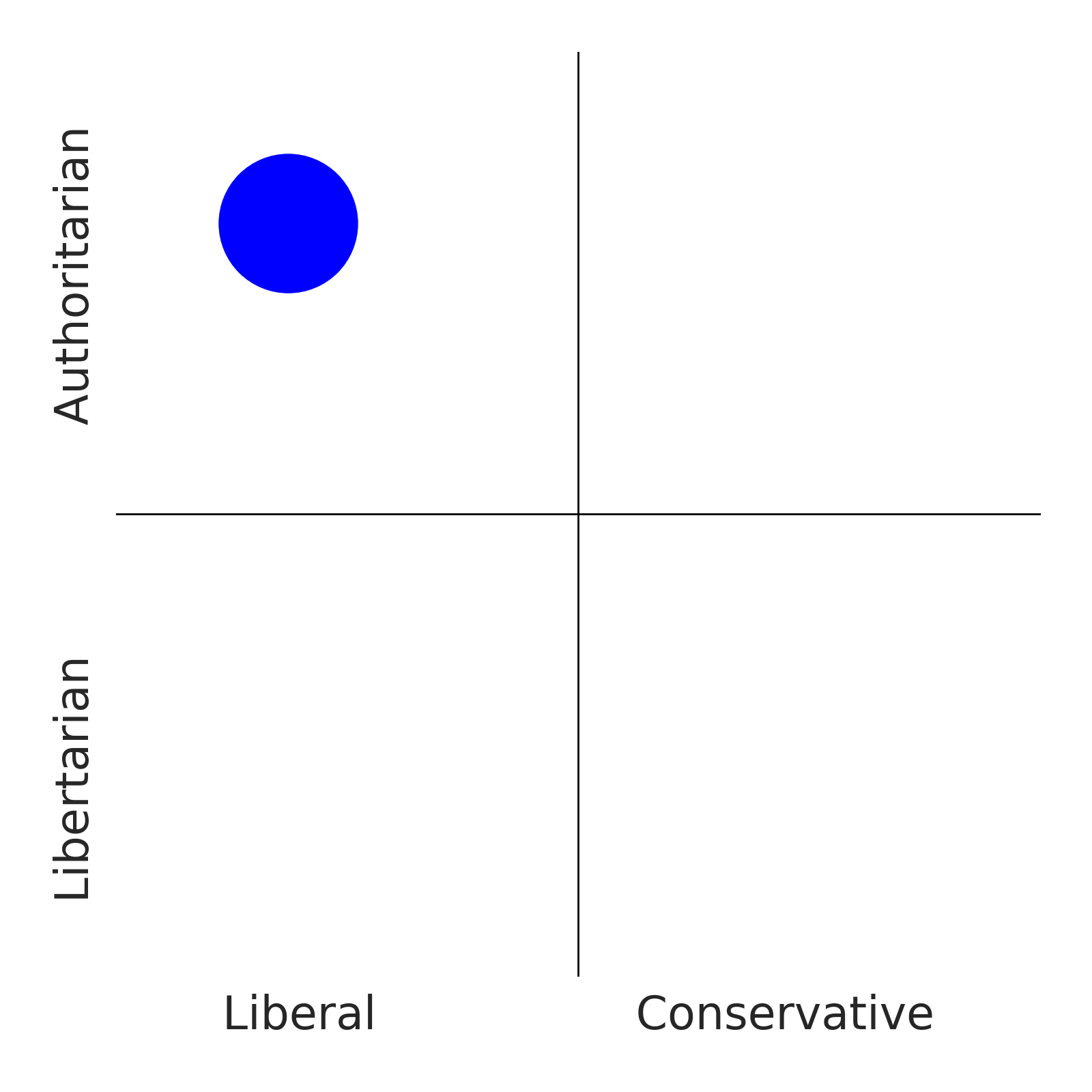
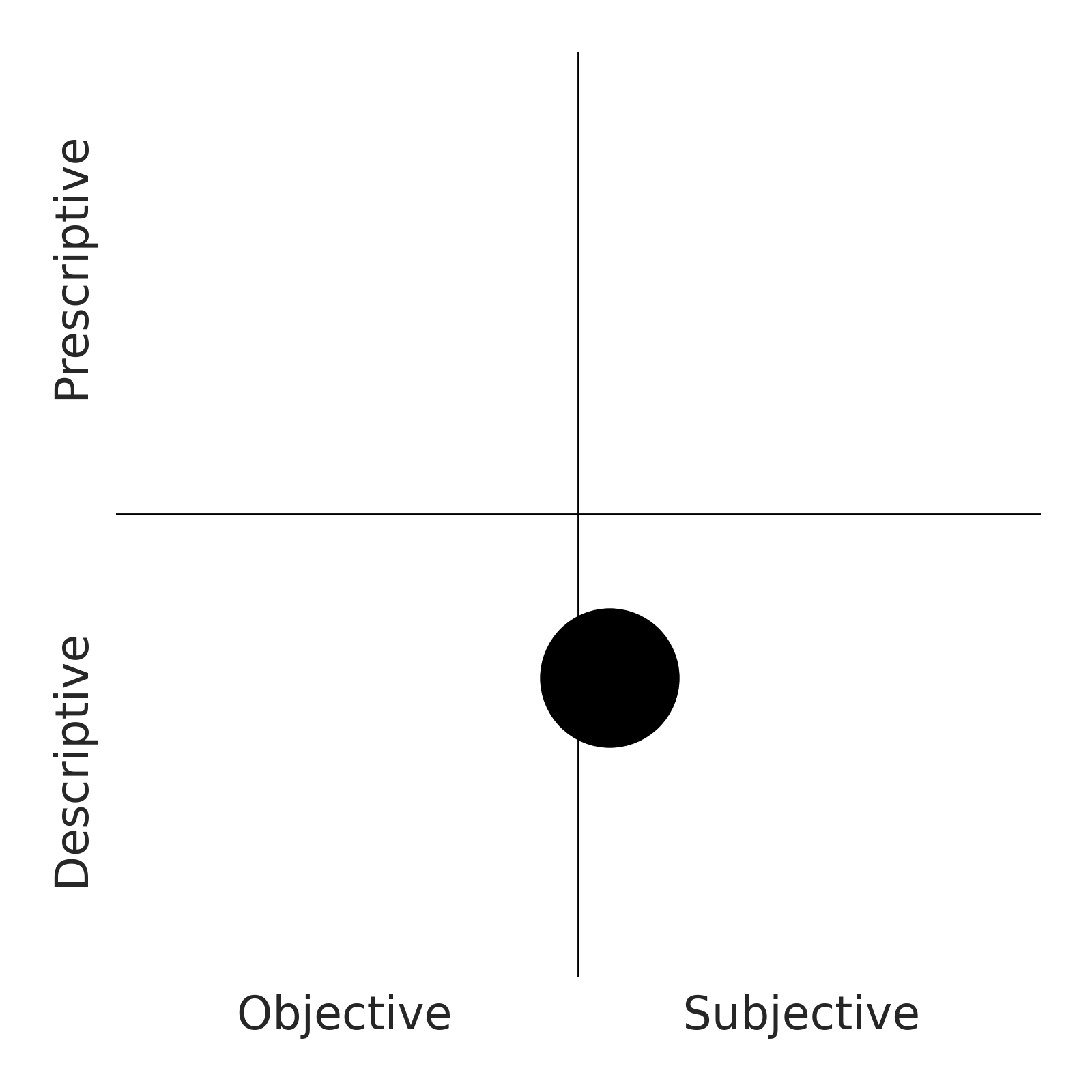
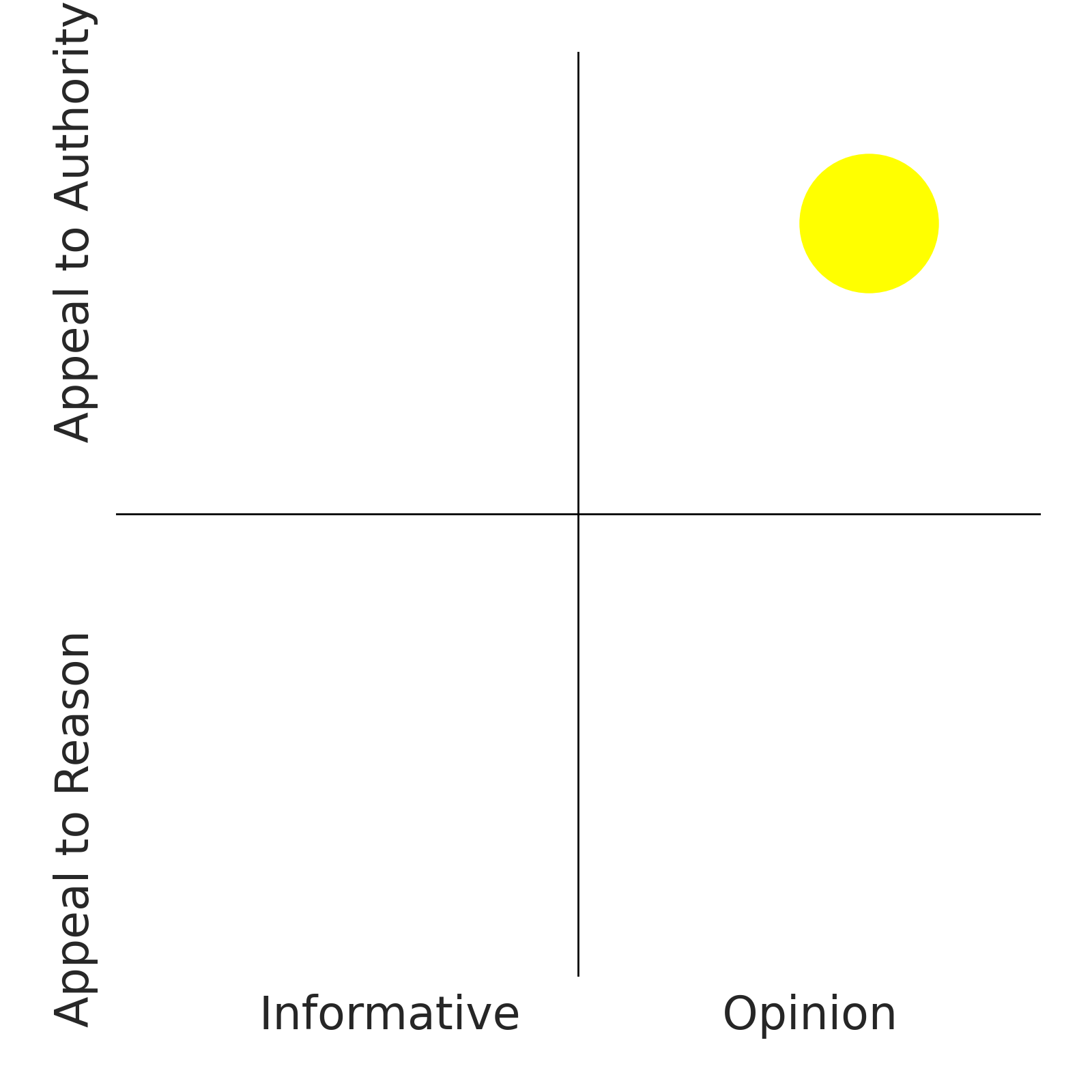
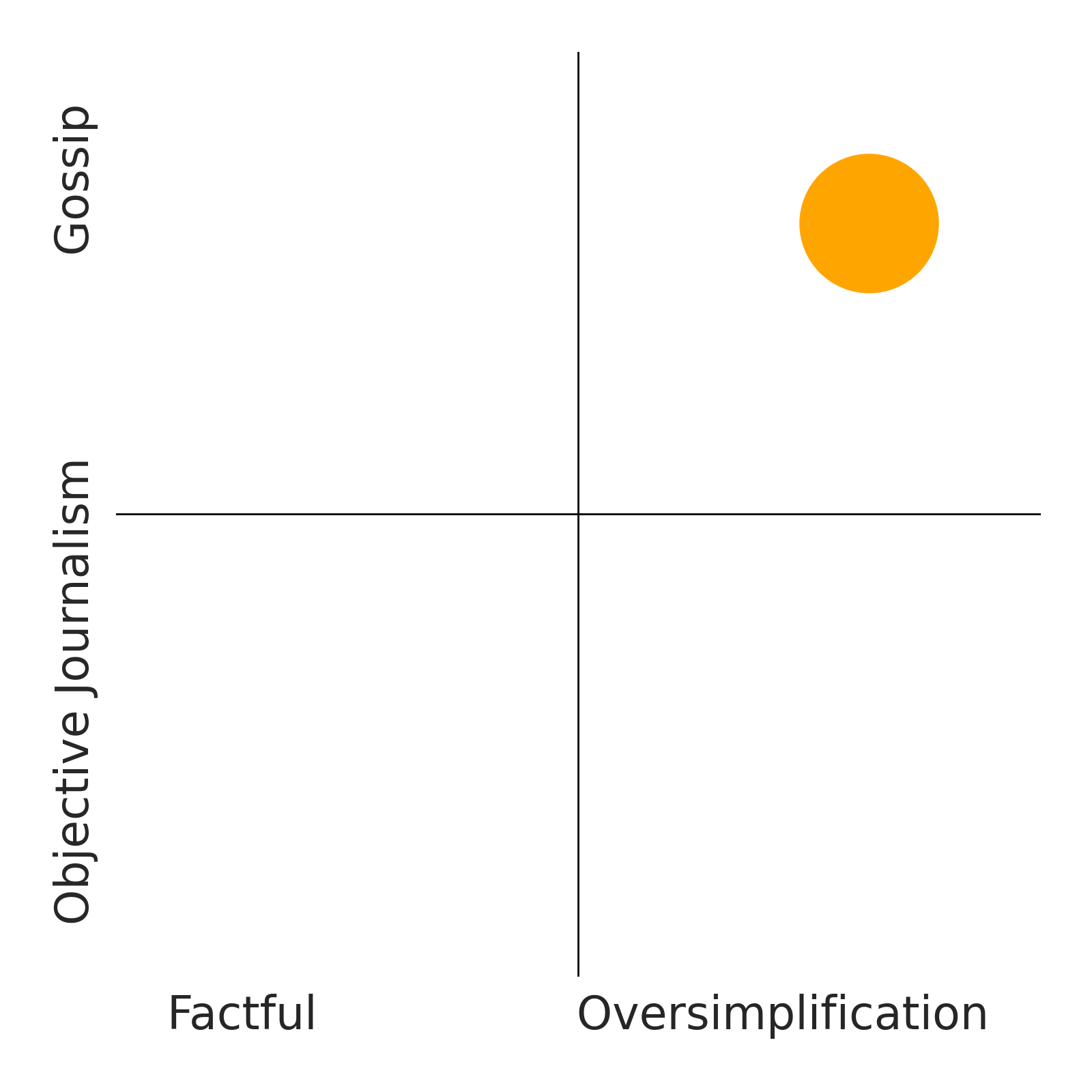
Click points to explore news by date. News sentiment ranges from -10 (very negative) to +10 (very positive) where 0 is neutral.
2026 © Helium Trades
Privacy Policy & Disclosure
* Disclaimer: Nothing on this website constitutes investment advice, performance data or any recommendation that any particular security, portfolio of securities, transaction or investment strategy is suitable for any specific person. Helium Trades is not responsible in any way for the accuracy
of any model predictions or price data. Any mention of a particular security and related prediction data is not a recommendation to buy or sell that security. Investments in securities involve the risk of loss. Past performance is no guarantee of future results. Helium Trades is not responsible for any of your investment decisions,
you should consult a financial expert before engaging in any transaction.
Helium Research Assistant

How can I help you today?
Ask any question about Huffington Post bias.


